Hotspot gratisHotspot gratis en todos los planes Sin reducción de velocidad en Horizondesde €0.27 7–180 días
Elige tu plan
¿Cuántos datos y durante cuánto tiempo?
01Compara los datos según la duración del viaje
30 días
7 días
15 días
180 días
La validez no empieza hasta que el eSIM se conecta a una red compatible en tu destino. No hay fecha límite para el primer uso. Puedes comprar el plan ahora y guardarlo para un futuro viaje. Reembolso íntegro a petición, hayas usado el eSIM o no. Siempre reembolsamos el importe total que pagaste cuando lo solicitas, tanto si tu eSIM no se ha usado como si se ha usado parcial o totalmente. No hay plazo límite para solicitar un reembolso.
¿Vas a más sitios?
Añade otro país: cada uno es un eSIM independiente y todos se gestionan en una sola app.
¿Necesitas más cobertura?
Explora nuestros eSIM regionales y globales: los paquetes parten del precio indicado e incluyen cobertura para el destino Croacia.
“I used the Horizon Balkans eSIM on a recent trip. The best part was not having to think about buying a new SIM every time I crossed a border. I used it for maps, WhatsApp, checking hotels, finding restaurants, and looking up beaches and places to visit.
The package covers Albania, Bosnia and Herzegovina, Bulgaria, Croatia, Greece, Montenegro, North Macedonia, and Serbia and I added Kosovo eSIM to the same order. I would use it again for another trip through the Balkans”
EN
“I used the Europe Esim, went through different countries with it and it was working super fast 5G everywhere. Suprised for good!”
EN
“The eSIM worked perfectly during my trip around Europe. It was very easy to install, connected as soon as I arrived, and the internet was fast and reliable everywhere I went. It made travelling much easier because I did not need to buy local SIM cards. Very convenient and worth the price. I would definitely use it again.”
No hay fecha límite para el primer uso. Puedes comprar el plan ahora y guardarlo para un futuro viaje.
eSIM Croacia para ciudades amuralladas, islas y costa
Compara planes eSIM para Croacia: Zagreb, Zadar, Split, Dubrovnik, los ferris a las islas y la carretera del Adriático. Compartir internet es gratis en todos los planes Horizon.
Croacia es un país largo y estrecho donde casi todas las grandes visitas están hechas de piedra o rodeadas de agua, y ambas cosas interfieren en la señal. Split ocupa el Palacio de Diocleciano: un palacio romano habitado, con estrechos pasillos de piedra y sótanos abovedados. Dubrovnik queda encerrada por un circuito de murallas de unos 1.940 metros, que en algunos puntos alcanzan unos 25 metros de altura. A las islas se llega en catamarán y ferry para coches desde muelles en pleno centro; el viento bora puede cancelar una travesía. Los muros gruesos, las aguas abiertas y las horas de carretera costera condicionan lo que alcanza el teléfono: guarda el horario del barco y el regreso antes de dejar el muelle.
Configura el perfil de Croacia antes de volar, con una conexión de confianza, y guarda los datos del pedido fuera del teléfono. El plan que compres indica el paso en que pasa a ser la línea de datos: sigue esas instrucciones. Los aeropuertos están fuera de los cascos antiguos: Split a unos 24 kilómetros, Dubrovnik a unos 21 y Zadar entre ocho y doce. Todos tienen autobuses lanzadera que tardan veinte a cuarenta minutos. Carga el traslado y la dirección del alojamiento antes de salir de la terminal, y mantén desactivados los datos de tu contrato habitual salvo que quieras pagar por ellos.
1
Compra un plan
Elige destino, cantidad de datos y periodo de validez.
2
Instala tu eSIM
Escanea el QR o instálalo automáticamente en la app: sin SIM física.
3
Aterriza y conéctate
Los datos se activan con la primera conexión en tu destino.
Ajústalo a tu viaje
Elige el perfil más parecido a tu viaje. La estimación asume un uso normal: mapas, mensajería, fotos y una llamada corta a casa.
Como referencia, una escapada urbana de 3–4 días gasta unos 1–3 GB, un viaje de una semana 3–5 GB, una ruta de dos semanas por varios países 8–12 GB, y trabajar de viaje consume alrededor de 1 GB al día, así que 15 GB o más para dos semanas.
En total, 5 GB de datos cubren aproximadamente 1700 fotos compartidas, 83 horas de redes sociales y navegación, 15 horas de videollamadas, 63 horas de música en streaming o unas 1000 horas de mapas y navegación. Las apps de mensajería apenas gastan datos.
Split se construyó dentro del Palacio de Diocleciano, un barrio vivo de la ciudad con estrechos pasillos de piedra, sótanos abovedados y el campanario de la catedral de San Domnio en el centro. La colina Marjan se eleva en el extremo occidental. El puerto de ferris está junto a la Riva, así que las salidas hacia las islas comienzan en la propia ciudad: Hvar queda a cincuenta a sesenta y cinco minutos en catamarán, y Supetar, en Brač, a unos cincuenta en ferry para coches. Guarda los horarios de ida y vuelta dentro de las murallas del palacio, donde los muros gruesos dificultan las consultas.
eSIM de Split: configúralo antes de volar
Dubrovnik · Guía de la ciudad
Dubrovnik
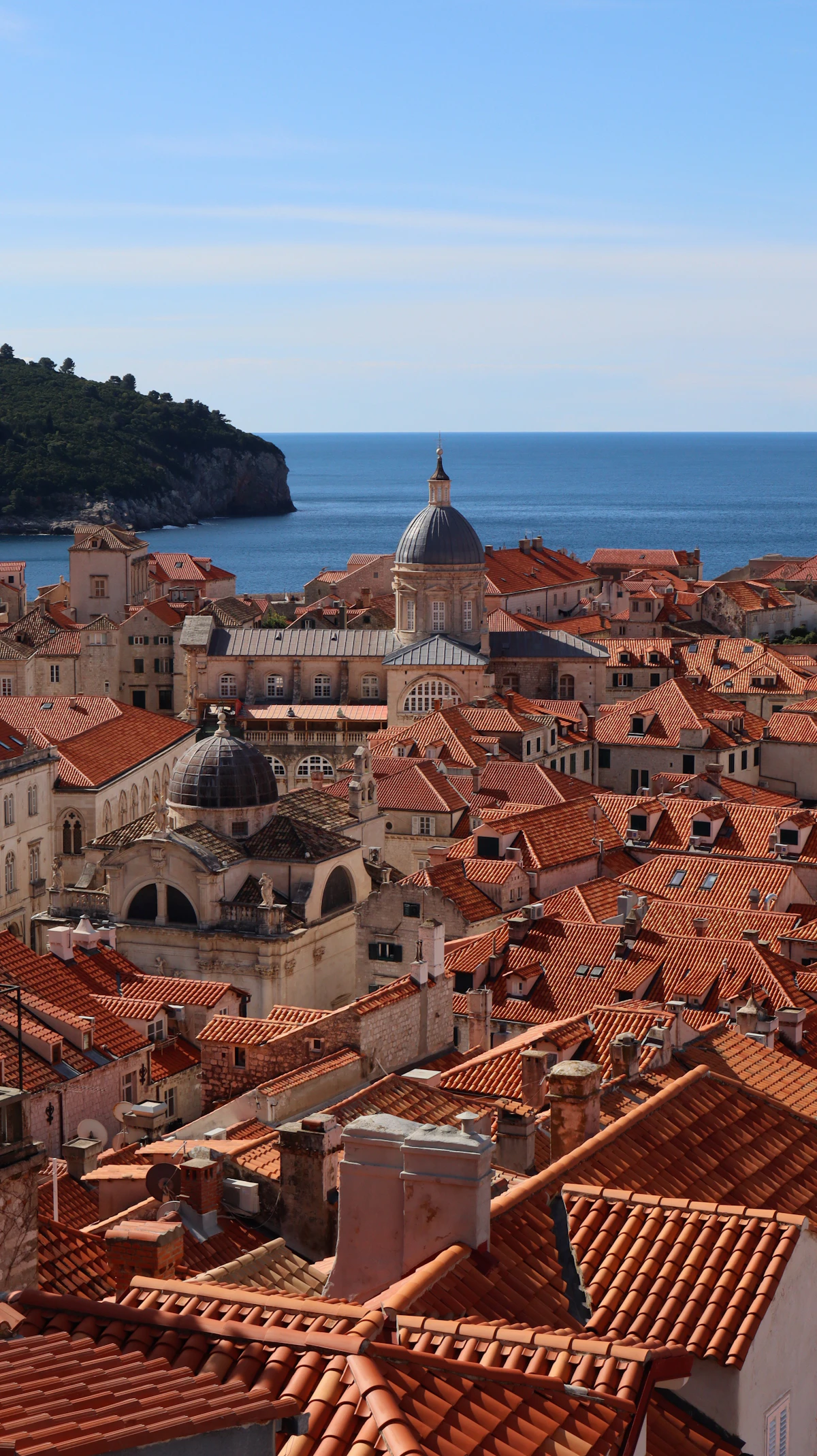
Las murallas de Dubrovnik forman un circuito ininterrumpido de unos 1.940 metros y alcanzan unos 25 metros de altura en algunos puntos. El paseo queda completamente expuesto y no tiene atajos para bajar. En el conjunto destacan Stradun y el fuerte Lovrijenac; fuera están el teleférico del monte Srđ y los barcos a Lokrum. Como el casco antiguo queda encerrado, lo habitual es aconsejar llegar antes de las multitudes de los cruceros y llevar la entrada de las murallas sin conexión. El aeropuerto de Čilipi está a unos 21 kilómetros, alrededor de treinta minutos en lanzadera hasta cerca de la puerta de Ploče.
eSIM de Dubrovnik: configúralo antes de volar
Zadar · Guía de la ciudad
Zadar
Zadar concentra su casco antiguo en una pequeña península. La iglesia circular de San Donato, del siglo IX, se levanta sobre el foro romano; el Órgano del Mar y el Saludo al Sol forman parte del paseo marítimo. El puerto de Gaženica conecta con Dugi Otok y las islas Kornati; Sakarun es una de las pocas bahías de arena clara y aguas poco profundas de esta costa. Zadar también es una base natural para Plitvice y Krka, cuyos senderos cierran o reducen su acceso en invierno. El aeropuerto de Zemunik está a entre ocho y doce kilómetros, unos veinte minutos en lanzadera.
eSIM de Zadar: configúralo antes de volar
Zagreb · Guía de la ciudad
Zagreb
Zagreb es la gran parada que queda fuera de la costa, organizada en torno a la Ciudad Alta, con la iglesia de San Marcos, el Museo de las Relaciones Rotas y el cementerio de Mirogoj. Medvednica se eleva justo sobre la ciudad y una telecabina sube a Sljeme, así que un día urbano puede terminar en una cresta boscosa. A diferencia de la costa, tiene actividad todo el año y vuelve a llenarse en Adviento mientras las localidades isleñas cierran. El aeropuerto está a unos 15 kilómetros, con lanzadera a la estación principal de autobuses en treinta y cinco a cuarenta minutos.
eSIM de Zagreb: configúralo antes de volar
Por qué Horizon
Elige según la temporada costera y los días en las islas
Un viaje de siete a diez días suele combinar dos bases y una isla; la estación determina su viabilidad. Julio y agosto son los meses más concurridos y con más ferris. Junio y septiembre ofrecen mar apto para bañarse y menos gente. Aproximadamente de noviembre a marzo, muchas localidades costeras e isleñas casi cierran, los catamaranes se reducen a un par al día y la bora puede cancelar las travesías: en invierno conviene orientar el viaje hacia Zagreb. Hay un detalle de ruta importante: Split y Dubrovnik ya se conectan completamente por territorio croata mediante el puente de Pelješac; la carretera anterior cruzaba una franja de Bosnia y Herzegovina con dos controles fronterizos.
Horizon eSIM Antes de viajar
Plan para
Croacia
Compara los detalles del plan
Comprueba la compatibilidad del dispositivo
Instálalo por Wi-Fi antes de salir
Elección flexible
Mejores planes, pensados para viajes reales
Compara los volúmenes de datos y los periodos de validez publicados para tu destino.
Antes de salir
Fácil de usar
Instálalo con una red Wi-Fi fiable antes de salir y sigue las instrucciones de activación del plan.
Comparación clara
Compara el plan completo
Revisa el precio actual, los datos, la validez y la cobertura antes de pagar. Los planes Horizon no tienen reducción de velocidad.
Reutiliza si es elegible
Reutiliza un eSIM elegible
Cuando el plan seleccionado admite reutilización o recargas, Mis eSIM muestra las opciones elegibles para el perfil instalado.
Control de consumo
Sigue conectado
Te avisaremos cuando te acerques a tu límite. Si el plan admite recargas, Mis eSIM muestra las opciones elegibles.
Multipaís
Planes globales y regionales
Elige cobertura por país, regional o global y comprueba cada destino en los detalles del plan.
Preguntas frecuentes
¿La carretera de Split a Dubrovnik todavía cruza Bosnia?
La ruta actual no. El puente de Pelješac, de 2,4 kilómetros, permite recorrer los aproximadamente 230 kilómetros entre Split y Dubrovnik, tres a cuatro horas, sin salir de Croacia. La antigua carretera costera cruzaba una franja de Bosnia y Herzegovina en Neum con dos controles fronterizos. Si la ruta o el autobús elegido sigue usando esa carretera, o si visitas Mostar, Bosnia y Herzegovina debe aparecer expresamente en la lista de destinos del plan.
¿Qué islas croatas merecen el trayecto en ferry?
Depende de la base. Desde Split, las habituales son Hvar, a cincuenta a sesenta y cinco minutos en catamarán, y Brač, a unos cincuenta minutos en ferry hasta Supetar, donde está la lengua de tierra de Zlatni Rat en Bol. Vis es más tranquila y alberga Stiniva, una cala entre acantilados accesible a pie o en barco. Desde Dubrovnik son frecuentes las Elafitas y Korčula; Lokrum está lo bastante cerca para una tarde. Comprueba los horarios de ida y vuelta antes de dedicarles el día.
¿Cuál es la mejor época para visitar la costa croata?
Junio y septiembre ofrecen el mejor equilibrio: el mar está suficientemente cálido para bañarse, los ferris mantienen horarios amplios y las ciudades amuralladas se recorren sin tantas colas. Julio y agosto traen calor y multitudes, especialmente en Dubrovnik, cuyo casco antiguo cerrado se llena rápido. Mayo y octubre son agradables en tierra, pero el mar está más frío. De noviembre a marzo gran parte de la costa prácticamente cierra: es mejor época para Zagreb y sus mercados de Adviento.
¿Las playas croatas son de arena o guijarros?
Principalmente de guijarros: tenlo en cuenta al preparar la maleta. La más emblemática es Zlatni Rat, en Bol, Brač: una lengua de guijarros finos que se adentra unos 450 metros en el mar y cambia visiblemente de forma con el viento y las corrientes. Sakarun, en Dugi Otok, es una de las escasas bahías de arena clara y poca profundidad. Punta Rata, en Brela, destaca en la Riviera de Makarska bajo Biokovo; Stiniva, en Vis, está rodeada de acantilados, y Zrće, en Pag, es una playa de discotecas al aire libre.
¿Necesito coche en Croacia?
Depende del viaje. Es útil en Istria, Plitvice y el interior, donde el transporte público es escaso y los parques quedan lejos de las ciudades. Para recorrer islas puede complicar la ruta: los ferris para coches son más lentos y menos frecuentes que los catamaranes, y el casco antiguo de Dubrovnik está cerrado al tráfico. Muchos itinerarios alquilan coche para el tramo interior y lo devuelven antes de la costa. De Zagreb a Zadar hay unos 290 kilómetros y tres horas de autopista.
¿Un plan para Croacia también cubre Montenegro o Eslovenia?
Solo si cada país figura en la lista del propio plan. Aquí las excursiones cruzan fronteras: Kotor y Budva están unas dos horas al sur de Dubrovnik, en Montenegro; Mostar es una visita habitual desde Split o Dubrovnik, en Bosnia y Herzegovina; Liubliana y el lago Bled, en Eslovenia, combinan bien con Zagreb e Istria. Croacia y Eslovenia pertenecen a la UE; Montenegro y Bosnia y Herzegovina no. Un mismo nombre europeo puede agruparlos de forma desigual: revisa la lista.
La eSIM ha dejado de funcionar en el casco antiguo: ¿está averiada?
Probablemente no. Los sótanos del palacio de Split y las calles amuralladas de Dubrovnik tienen piedra gruesa, y la cubierta de un catamarán está en aguas abiertas. Una señal que desaparece allí y vuelve al salir puede comportarse con normalidad. Evalúa primero el perfil en un espacio abierto. Si sigue fallando, abre la guía del plan con el Wi-Fi del alojamiento, confirma que el perfil de Croacia esté activado y seleccionado para los datos móviles y sigue en orden los pasos de itinerancia y APN. Si persiste, envía a soporte la referencia del pedido y el modelo del teléfono.
¿Horizon reduce la velocidad de mis datos?
No. Los planes Horizon no tienen reducción de velocidad. No hay un límite diario que te frene, así que puedes usar todo el plan en un día si lo necesitas. La velocidad depende de la red local, de tu señal y de lo saturada que esté la red. Cuando se agotan tus datos, el plan se detiene en lugar de ir más lento.
¿Puedo pedir un reembolso si ya he usado datos?
Sí. Siempre reembolsamos el importe total que pagaste cuando lo solicitas, tanto si tu eSIM no se ha usado como si se ha usado parcial o totalmente. No hay plazo límite para solicitar un reembolso.
Próxima parada
Croacia: otros destinos que los viajeros suelen combinar
Usamos cookies para que Horizon funcione, para entender cómo se usa y para medir nuestros anuncios. Siguen activas salvo que te opongas: aquí o en cualquier momento en la página de cookies.