



Buy a plan
Pick a destination, data allowance and validity period.





A New Zealand plan is chosen against two halves of a country that behave nothing alike. The North Island runs Auckland to Rotorua on a direct road; the South Island runs Christchurch to Queenstown across high country and on to Fiordland. Compare the data amount, the length of validity and the territory named on the plan, and treat performance as variable: it turns on the plan, the handset, the exact spot, the rock or tunnel above the road, and whichever partner network reaches that valley.
Two islands, and no road between them. Auckland is the main international gateway and the largest city; Rotorua lies about 230 kilometres south of it in an active geothermal field of geysers, boiling mud and steaming ground. The South Island is reached by air or by ferry across Cook Strait, and its own distances are long — Christchurch to Queenstown is roughly 485 kilometres of high country. Beyond Te Anau, Fiordland runs for long stretches with no townships at all.
Refund policy
Get a full refund within 7 days if no data is used, even after installation. If it doesn't work and we can't fix it, we refund you.
Activation window
Check the package details for the first-use deadline and validity rules.
Secure checkout
Cards, Apple Pay & Google Pay — encrypted by Paysera.
Customer support
Contact support before or during your trip if you need help.
Before the flight, read your plan's installation, activation and validity instructions, and install over trusted Wi-Fi at the appropriate stage. Auckland's international terminal is about 21 kilometres south of the city centre. AirportLink connects the airport with Puhinui Station for onward rail services and with Manukau; SkyDrive serves SkyCity in central Auckland. Taxis and rideshares are also available. Check the current operator journey planner for departures and any rail replacement services. Select the eSIM as your mobile-data line when your plan instructs, then save ferry, rental and accommodation details offline for the quieter stretches inland.
Pick a destination, data allowance and validity period.
Scan the QR or auto-install in the app — no physical SIM.
Data activates on first connection at your destination.
Pick the profile closest to your trip. The estimate assumes normal use — maps, messaging, photos, a short call home.
As a rule of thumb, a 3–4 day city break runs on about 1–3 GB, a one-week trip on 3–5 GB, a two-week multi-country tour on 8–12 GB, and working on the road takes about 1 GB a day, so 15 GB or more for two weeks.
In total, a 5 GB data allowance covers roughly 1,700 shared photos, 83 hours of social media and browsing, 15 hours of video calls, 63 hours of music streaming, or about 1000 hours of maps and navigation. Messaging apps barely use data.
Auckland · City guide
Auckland is the largest city and the main international gateway, so most itineraries begin here. The Sky Tower, the Auckland War Memorial Museum and the Viaduct Harbour waterfront sit inside a walkable core, while Waiheke Island and its vineyards are a ferry ride out across open water — the crossing is where a handset falls back to whatever reaches it from shore. The airport lies about 21 kilometres south of the centre.
Auckland eSIM — set up before you fly →Rotorua · City guide
Rotorua sits about 230 kilometres from Auckland, a drive of roughly two and three-quarter to three hours on a direct road. Te Puia and Wai-O-Tapu line geysers, boiling mud pools and coloured terraces along boardwalk routes, and the Whakarewarewa Maori village and Lake Rotorua fill out a day. The town stands in an active geothermal field, with steaming ground between the attractions, so load the park maps before walking in. Rotorua airport is a few kilometres southeast.
Rotorua eSIM — set up before you fly →Christchurch · City guide
Christchurch is the South Island gateway and calls itself the Garden City. The Botanic Gardens, Cathedral Square, Riccarton House and the heritage tram precinct are all central, and Canterbury opens out from there. What matters for a data decision is what comes next: the road to Queenstown runs about 485 kilometres and five and a half to six hours through inland high country such as the Lindis Pass, which can carry snow between June and August. The airport is about 10 kilometres northwest.
Christchurch eSIM — set up before you fly →Queenstown · City guide
Queenstown is an alpine lake resort on Lake Wakatipu, with the Skyline Gondola climbing Bob's Peak, the Remarkables range across the water and the old gold town of Arrowtown close by. Its airport sits a few kilometres out at Frankton, among the most central in the country. The classic long day out is Milford Sound, about 290 kilometres via Te Anau and four to four and a half hours each way, through fiord terrain and the Homer Tunnel.
Queenstown eSIM — set up before you fly →Why Horizon
Match the data to the shape of the trip rather than to the number of nights. A stay of two or three weeks taking in both islands means airports, long highway legs and a boat crossing, with the map open most of the day; a short North Island loop of Auckland and Rotorua asks far less. Check that the validity window still covers the return leg, and read the territory list to confirm New Zealand itself is named on the plan.
Plan for
New Zealand
Compare the listed data allowances and validity periods for your destination.
Install over reliable Wi-Fi before departure and follow the plan's activation instructions.
Review the current price, data, validity, coverage and fair-use terms before checkout.
When the selected plan supports reuse or top-ups, My eSIMs shows the eligible options for the installed profile.
We'll alert you as you approach your limit. If the plan supports a top-up, My eSIMs shows the eligible options.
Choose country, regional or global coverage and check every destination in the plan details.
It can, and two to three weeks is the length most first itineraries are built around. The islands have no road between them, so the plan has to absorb either a domestic flight of about an hour and twenty minutes between Auckland and Christchurch, or a drive to Wellington plus the Interislander ferry to Picton. Shorter than a fortnight and something usually gets cut, most often Fiordland, which sits furthest from either gateway.
Yes, and it is worth planning around. The Milford Road passes through the Homer Tunnel, which runs 1,270 metres with its eastern portal at 945 metres and moves vehicles in light-controlled one-way sections. The road closes an average of about eight days a year in the colder months, and avalanche control above the route is triggered by helicopter. Between Te Anau and the sound there are long stretches with no townships, so check the road status before setting out.
Both are normal options. Flying between Auckland and Christchurch takes roughly an hour and twenty minutes. To cross Cook Strait, travel overland to Wellington, take Interislander to Picton in about three and a half hours, then continue the journey. If you want to bring a rental car, first confirm the rental company permits it and book the vehicle with the ferry operator; do not assume the same car can stay with you between islands. Save sailing and onward details offline because connectivity can vary on open water.
Self-driving is popular within each island, but it requires preparation for left-hand driving and unfamiliar roads. Read NZ Transport Agency guidance, plan rest breaks and avoid starting a long drive while tired after a flight. Winding roads and changing weather can extend journeys beyond what straight-line distances suggest: Christchurch to Queenstown is about 485 kilometres and five and a half to six hours before stops. Compare flights or organised transport if driving does not suit you, and allow for a separate crossing between islands.
It depends on what the trip is for. Christchurch is the wider gateway, flat and central, and the natural start for Canterbury and a longer South Island loop. Queenstown is the alpine base, on Lake Wakatipu beneath the Remarkables, and the sensible starting point for the Milford Sound day trip at about 290 kilometres each way via Te Anau. The two are roughly 485 kilometres apart, or an hour by domestic flight.
Seasons run opposite to Europe and North America. December to February is the warmest window and the one beach days are planned around; swimming is broadly December to March, though the water stays cool by tropical standards. June to August is the coldest stretch, and the ski season around Queenstown and Wanaka runs June to September. November and March are the shoulder months, with good conditions and fewer crowds.
Yes, and it is the standard short North Island section. Rotorua is about 230 kilometres from Auckland on a direct road, roughly two and three-quarter to three hours, which makes a two- or three-night pairing easy before flying south. Auckland covers the city, the museum and the Waiheke ferry; Rotorua covers the geothermal parks at Te Puia and Wai-O-Tapu, the Whakarewarewa village and the lake. Both sit on the main North Island touring route.

The long-haul circuit is a series of joins, not a line on a map. Where one regional data profile earns its keep on this route, and when a single-country plan is still the better buy.
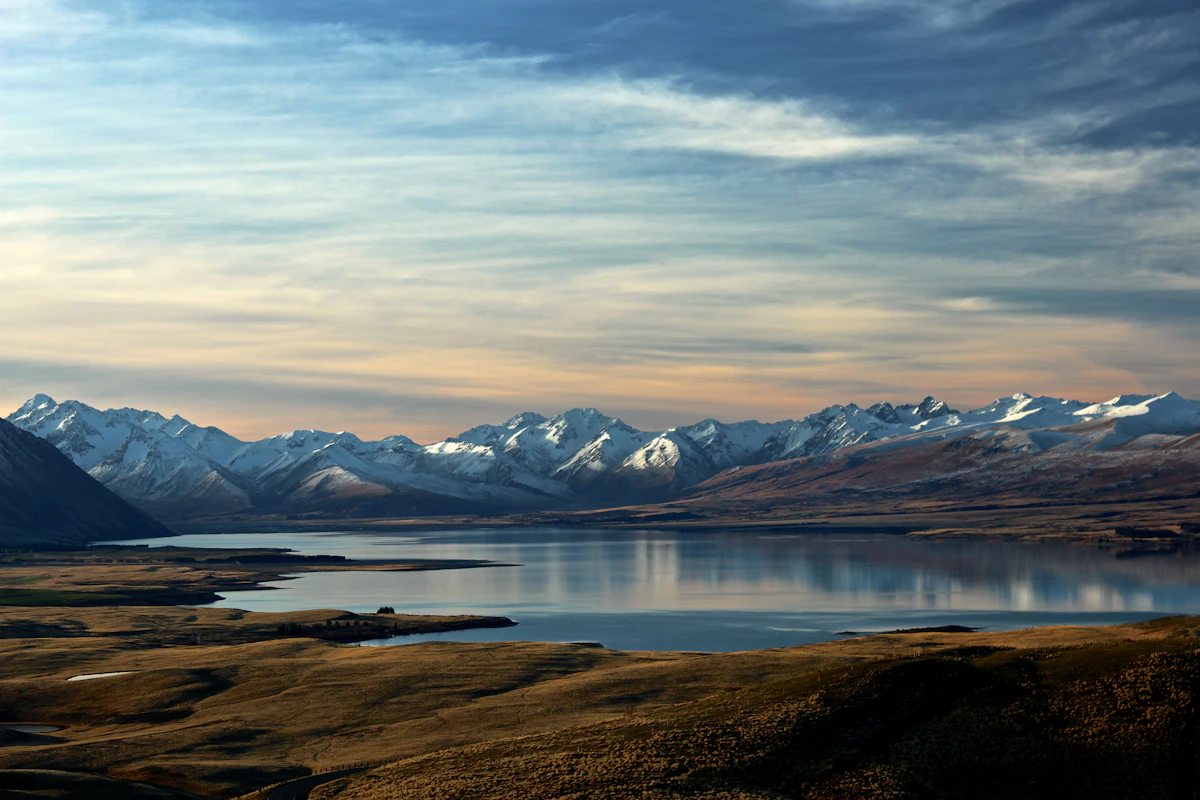
Choose a New Zealand eSIM by your route, data use and travel dates. Compare the current plans, then check your phone and setup instructions.
A long weekend in one New Zealand city runs 2–4 GB, a week touring 6–10 GB, and a fortnight or road trip 12 GB and up. Your Australian number stays put.
