



EN
“I used the Europe Esim, went through different countries with it and it was working super fast 5G everywhere. Suprised for good!” 




“I used the Europe Esim, went through different countries with it and it was working super fast 5G everywhere. Suprised for good!” “The eSIM worked perfectly during my trip around Europe. It was very easy to install, connected as soon as I arrived, and the internet was fast and reliable everywhere I went. It made travelling much easier because I did not need to buy local SIM cards. Very convenient and worth the price. I would definitely use it again.” Compare Cyprus eSIM plans for the Paphos archaeological sites, Limassol and Kourion, the Ayia Napa beaches and the Troodos mountains. Match the data to a week that can hold a beach morning and a Troodos afternoon in one day, then check what the offer itself says about territory and hotspot use.
Cyprus is small enough to drive across in an afternoon and varied enough that a single trip can mix a beach morning with a mountain afternoon. The south is fully motorway-linked, and most journeys fit inside two to three hours: Nicosia to Limassol is about 73 kilometres, Limassol to Paphos 66, Larnaka to Ayia Napa 55. Above all that sits the Troodos range, where Mount Olympus reaches 1,952 metres and the roads narrow into forest. One thing here is unlike anywhere else on this site: the island is divided, and the practical consequence for a phone is worth reading before you arrive.
Refund policy
Get a full refund within 7 days if no data is used, even after installation. If it doesn't work and we can't fix it, we refund you.
Activation window
Check the package details for the first-use deadline and validity rules.
Secure checkout
Cards, Apple Pay & Google Pay — encrypted by Paysera.
Customer support
Contact support before or during your trip if you need help.
Add the Cyprus profile before you travel, on a connection you already trust, and keep the order details off the handset. Each plan states in its own words the step at which it takes over as the data line, and the place to work through that wording is a room in Limassol rather than a forest road up to Platres. Larnaka airport sits about five kilometres from Larnaca centre, with a bus into town in roughly twenty-five minutes and coaches onward to Nicosia and Limassol; Pafos airport is about fifteen kilometres southeast of Paphos with buses in thirty to forty. Keep the everyday contract's mobile data switched off unless being billed is a choice you have made, which counts double on an island where a handset near the dividing line can pick up a network from the other side.
Pick a destination, data allowance and validity period.
Scan the QR or auto-install in the app — no physical SIM.
Data activates on first connection at your destination.
Pick the profile closest to your trip. The estimate assumes normal use — maps, messaging, photos, a short call home.
As a rule of thumb, a 3–4 day city break runs on about 1–3 GB, a one-week trip on 3–5 GB, a two-week multi-country tour on 8–12 GB, and working on the road takes about 1 GB a day, so 15 GB or more for two weeks.
In total, a 5 GB data allowance covers roughly 1,700 shared photos, 83 hours of social media and browsing, 15 hours of video calls, 63 hours of music streaming, or about 1000 hours of maps and navigation. Messaging apps barely use data.
Paphos · City guide
Paphos holds the Kato Paphos Archaeological Park with the House of Dionysos and House of Theseus mosaics, the Tombs of the Kings, and a harbour beneath a medieval castle. The park is a large open coastal site covered on foot, so a day here is walking rather than driving. North of Coral Bay the Akamas tracks are unsurfaced, and the Blue Lagoon and Lara Bay are reached partly by dirt road — that is the stretch to prepare for offline. Pafos airport is fifteen kilometres southeast, and Limassol is 66 kilometres along the A6.
Paphos eSIM — set up before you fly →Limassol · City guide
Limassol runs a long seafront promenade below its Old Town lanes and castle, with the Marina at one end. Ancient Kourion and its Greco-Roman theatre sit up on the coastal escarpment west of the city, with Kolossi Castle between them, and the Troodos foothills begin directly behind. That climb from sea level to the ruins and then into the mountains is the day's real shape here. Nicosia is 73 kilometres away on the motorway, about an hour, and Paphos 66 on the A6, about fifty minutes.
Limassol eSIM — set up before you fly →Nicosia · City guide
Nicosia is the one major stop that is not on the coast, sitting roughly at the island's centre inside its Venetian walls, with Ledra Street running through the old town, the Cyprus Museum nearby and the Laiki Geitonia quarter restored around it. The walled centre is a dense grid of narrow lanes, so it walks well and thins reception in the usual way. It is also where the division is most visible, and where a handset is most likely to find a network from the other side without anyone crossing.
Nicosia eSIM — set up before you fly →Ayia Napa and the Troodos · City guide
The east coast holds the busiest sand: Nissi Beach and Makronissos at Ayia Napa, Fig Tree Bay at Protaras, and Konnos Bay between them, with Cape Greco National Forest Park and its sea caves reached by park roads and walking trails. Inland and west, the Troodos range rises to Mount Olympus at 1,952 metres, holding Kykkos Monastery, the UNESCO-listed painted churches such as Asinou, and villages like Omodos and Platres on narrow forested roads. There is a ski season up there from about January to the end of March, snow permitting.
Ayia Napa and the Troodos eSIM — set up before you fly →Why Horizon
A week covers one coast plus a mountain day comfortably, and the south's motorway network keeps almost every journey inside two to three hours. July and August run into the low-to-mid thirties and fill the east-coast resorts; May and September to October are the sweet spot, with a warm sea and thinner crowds. The one genuinely unusual planning point is the island's division, and it is a coverage matter rather than a political one here: the northern part of the island is administered separately and has its own mobile networks, so what a handset registers on is not always what the map suggests. Read the next answer before travelling.
Plan for
Cyprus
Compare the listed data allowances and validity periods for your destination.
Install over reliable Wi-Fi before departure and follow the plan's activation instructions.
Review the current price, data, validity, coverage and fair-use terms before checkout.
When the selected plan supports reuse or top-ups, My eSIMs shows the eligible options for the installed profile.
We'll alert you as you approach your limit. If the plan supports a top-up, My eSIMs shows the eligible options.
Choose country, regional or global coverage and check every destination in the plan details.
Check the selected plan's destinations, local networks and terms for each area you intend to visit; the Cyprus label alone does not establish service on every network or throughout the island. Near the dividing line, the phone may detect an unexpected network without you crossing, so review the displayed network before using data. Follow the plan's guide to select a permitted network and check the home line's charges separately. An eSIM does not establish permission to cross or that a checkpoint is open; consult the relevant authorities for the intended route if crossing.
A week covers one coast plus a mountain day comfortably. The south is fully motorway-linked and most journeys fit inside two to three hours — Nicosia to Limassol is 73 kilometres, Limassol to Paphos 66, Larnaka to Ayia Napa 55 — so nothing is far. The exception is end to end: Paphos to Ayia Napa is about 200 kilometres and two and a half hours, which is the one leg worth avoiding as a day trip. Two weeks lets you take both coasts without moving hotel every night.
The east is the beach answer and the west is the ruins one. Ayia Napa and Protaras hold the pale sand and shallow entry — Nissi, Makronissos, Fig Tree Bay, Konnos — and they are the busiest strip on the island. Paphos gives you the Kato Paphos mosaics and the Tombs of the Kings, with the wilder Akamas coast north of Coral Bay reached partly on unsurfaced track. Limassol sits between them with Ancient Kourion above it. If only one, pick by whether you would rather walk a site or swim off sand.
In a narrow window, yes. Mount Olympus in the Troodos reaches 1,952 metres and carries a ski season from about January to the end of March, snow permitting, while the coast stays mild through winter. That overlap is genuinely unusual for a Mediterranean island. It is not the same as swimming comfortably, though — the sea season runs roughly mid-May to the end of October, so a January trip means skiing above and walking the coast below rather than a beach day. Check the snow before planning around it.
Buses link the airports and the main towns, and coaches run between Larnaka, Nicosia and Limassol, so a town-based trip works without one. A car changes what is reachable beyond that: the Akamas tracks north of Coral Bay are unsurfaced, the Blue Lagoon and Lara Bay are partly dirt road, and the Troodos villages sit up narrow forested roads. Cape Greco is park roads and trails. If the itinerary is beaches and old towns, skip the car; if it includes the wilder coast or the mountains, take one.
It is the hottest and the busiest together. July and August run into the low-to-mid thirties and fill the east-coast resorts, so the sand at Nissi and Fig Tree Bay is at capacity while the archaeological sites — which are open, walked and largely unshaded — are at their least comfortable. May and the September to October stretch give a warm sea with far more room, which is why they are the usual recommendation. The swimming season itself runs roughly mid-May to the end of October, so the shoulder months lose nothing.
Check the displayed network against those permitted by the plan, especially near the dividing line where signals may overlap. If the network is not included, stop using its data and follow the plan's guide for automatic or manual network selection; do not change your route or enter a restricted area to seek signal. On available Wi-Fi, open the setup guide, confirm the Cyprus profile is enabled and assigned to mobile data, and review the required roaming settings. If the problem continues, send support the order reference, handset model, displayed network and current location.
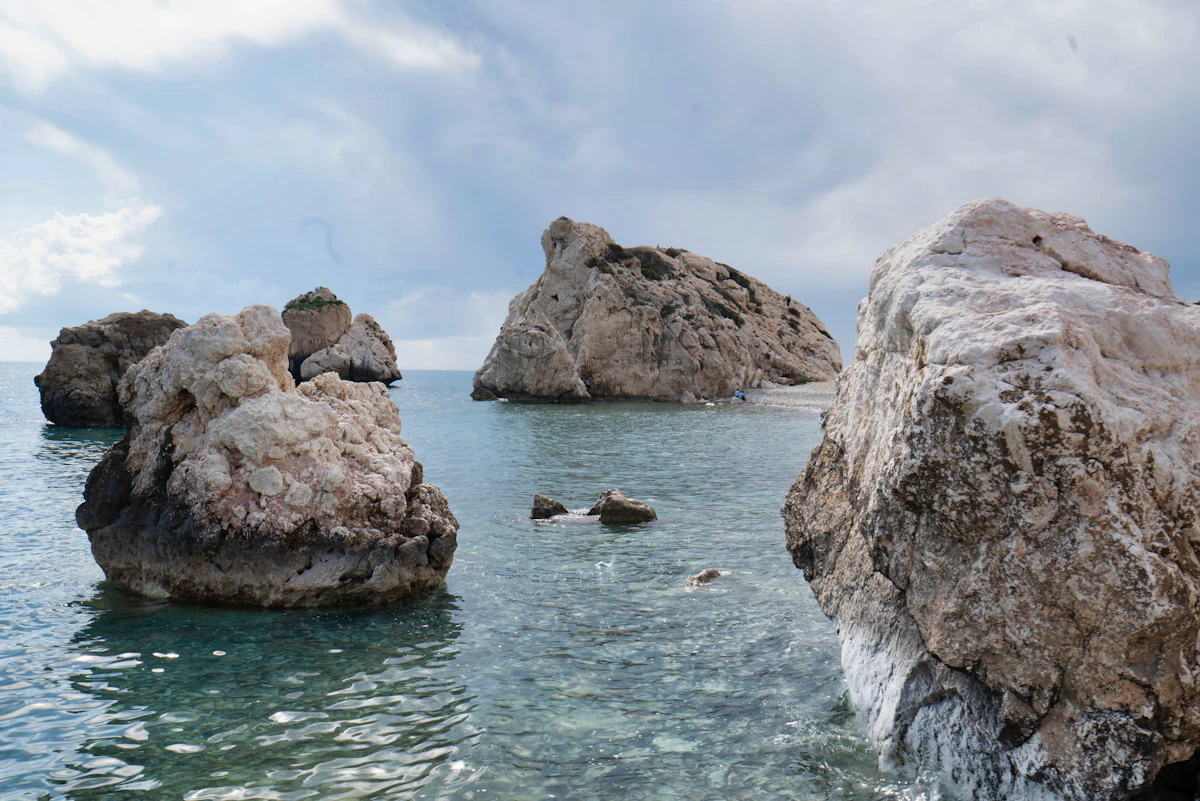
Cyprus is a one-base island: you sleep in Ayia Napa or Paphos and spend every day somewhere else. Here is how to size a Cyprus eSIM for the driving, not the sleeping.
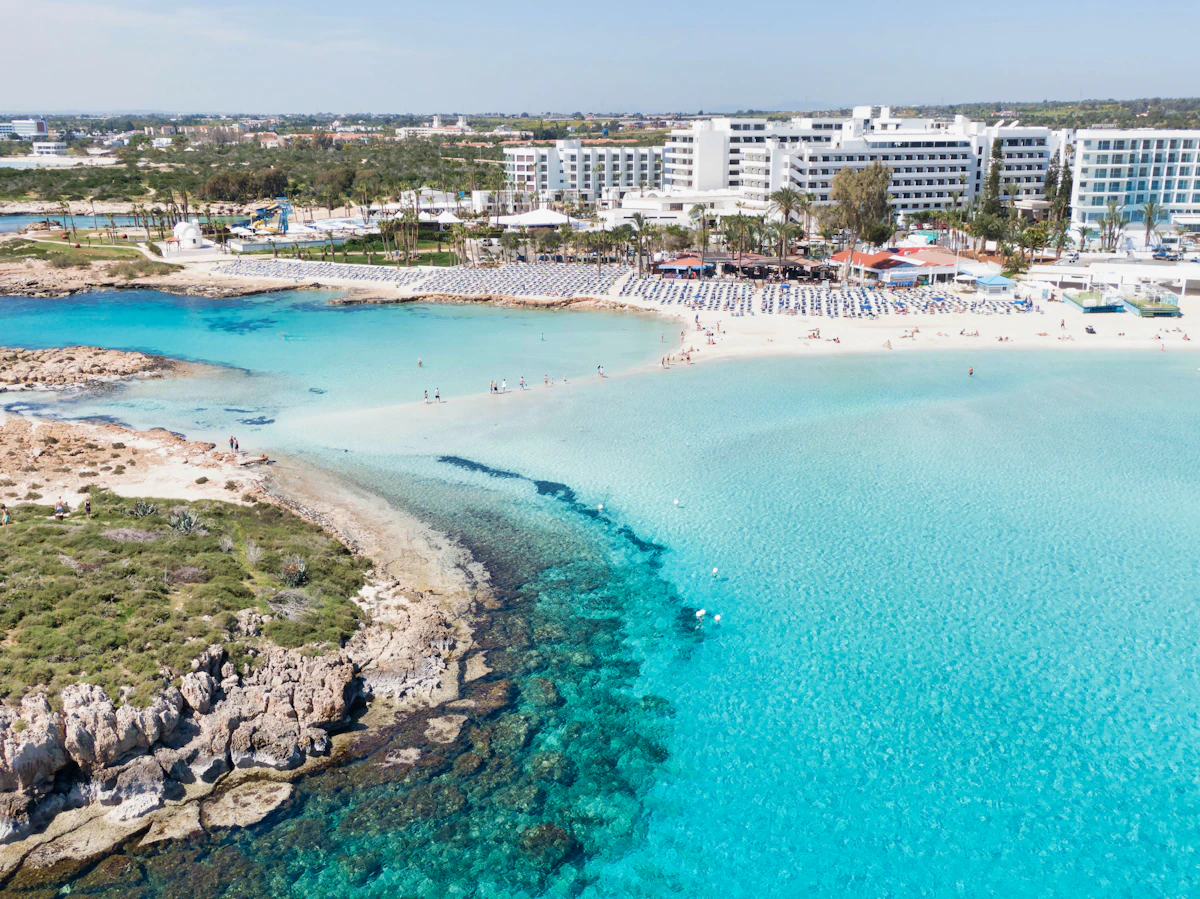
Turquoise bays at Cape Greco, the Troodos mountains and long beach days — here's how to keep maps and bookings live across a Cyprus summer.


