



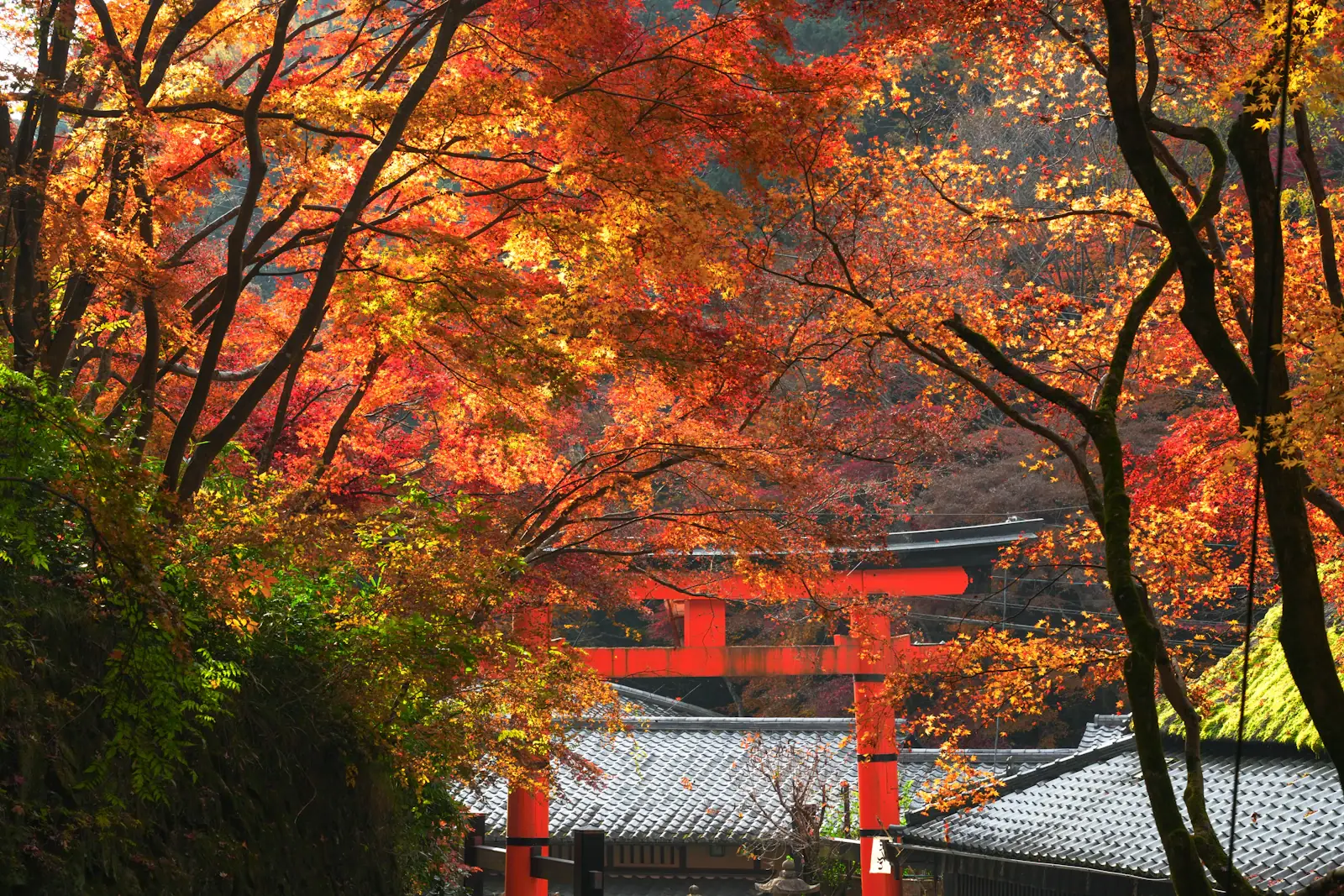
A warm afternoon in Tokyo, a jacket after sunset in Hakone, a Kyoto garden turning red: autumn arrives at different times across Japan. That matters more than finding one supposedly perfect week. An October trip and a late-November trip can both be rewarding, but they should not carry the same expectations for the leaves.
This guide is written for an independent journey from Germany, with around two weeks in Japan. It combines a flexible first-time route with the practical detail that makes travel easier: saved station exits, enough time between bases, a sensible data allowance and a phone ready before landing.
Reviewed 9 October 2026. Foliage guidance describes typical seasonal patterns, not a confirmed daily forecast. The cards above use the current Japan catalog; the provider prices below are a dated comparison.
October or November?
For a Tokyo–Kyoto trip built around autumn leaves, November is generally the stronger starting point. October can be excellent for city sightseeing, but do not expect every central park to be red already. JNTO's October guide points travellers towards northern and higher-altitude areas for earlier colour.
| Timing | A practical focus | What to keep flexible |
|---|---|---|
| October | Tokyo and Kyoto for the cities; consider a northern or higher-altitude section for leaves | The region and elevation matter more than the season's name. |
| November | Tokyo, Kyoto and Kansai with garden days | Colours vary between years and between sites within one city. |
| Late November into early December | Later foliage may remain in milder urban areas | Check local reports and allow for shorter days and cool evenings. |
Choose the route you actually want, then keep two or three outings interchangeable. Changing hotels every night does not necessarily make you flexible; it also commits you to packing, luggage and another transfer.
Use JNTO's November guide and Kyoto's official autumn calendar for the final decisions. Check the reporting year: a 2025 calendar is not a 2026 forecast.
A 14-day route with room to enjoy it
These are 14 days on the ground, so add travel from and back to Germany when booking leave. Departing from Kansai can remove a return journey to Tokyo; compare the complete flight and rail cost first.
Days 1–4: Settle into Tokyo
Keep arrival day modest: leave the bags, find a meal and get to know the neighbourhood. Group Asakusa and Ueno into an eastern city day, and give Shibuya and Shinjuku a separate day. It is easier to enjoy a place when every photograph does not require another cross-city train.
In November, leave space for a garden or park chosen using current colour reports. Save the hotel address in Japanese, the useful station exit and your actual airport transfer. Haneda and Narita are different starting points. Narita also has separate stations for Terminal 1 and Terminals 2/3; check the intended service with JR East.
November 2026: JR East lists partial Narita Express suspensions for 6–8 November; check your specific train.

Autumn within the city. Photo: Tsuyoshi Kozu / Unsplash. This is an earlier photograph, not a live foliage report.
Days 5–6: Slow down in Hakone
Two days give you more breathing room than a tightly packed day trip. Choose accommodation around the journeys you intend to make and check the last connection before travelling farther out in the evening. A view of Mount Fuji depends on the weather, so make the stay worthwhile even if the mountain stays hidden.
If October foliage is the main goal, consider replacing this section with a northern or higher-altitude destination. Treat that as a route change, not an extra excursion squeezed between long train rides.
Days 7–11: Explore Kyoto by area
Give eastern Kyoto and Arashiyama different days. A garden, a walk and a good meal can make a better day than six temples separated by bus changes. Keep one day for Nara or another Kyoto neighbourhood.
Autumn evening openings have their own dates, admission arrangements and sometimes separate tickets. Confirm them with the venue. Follow marked paths, respect private lanes and ask before photographing people. Kyoto's official autumn sightseeing advice is useful, provided you check the year of any event listing.
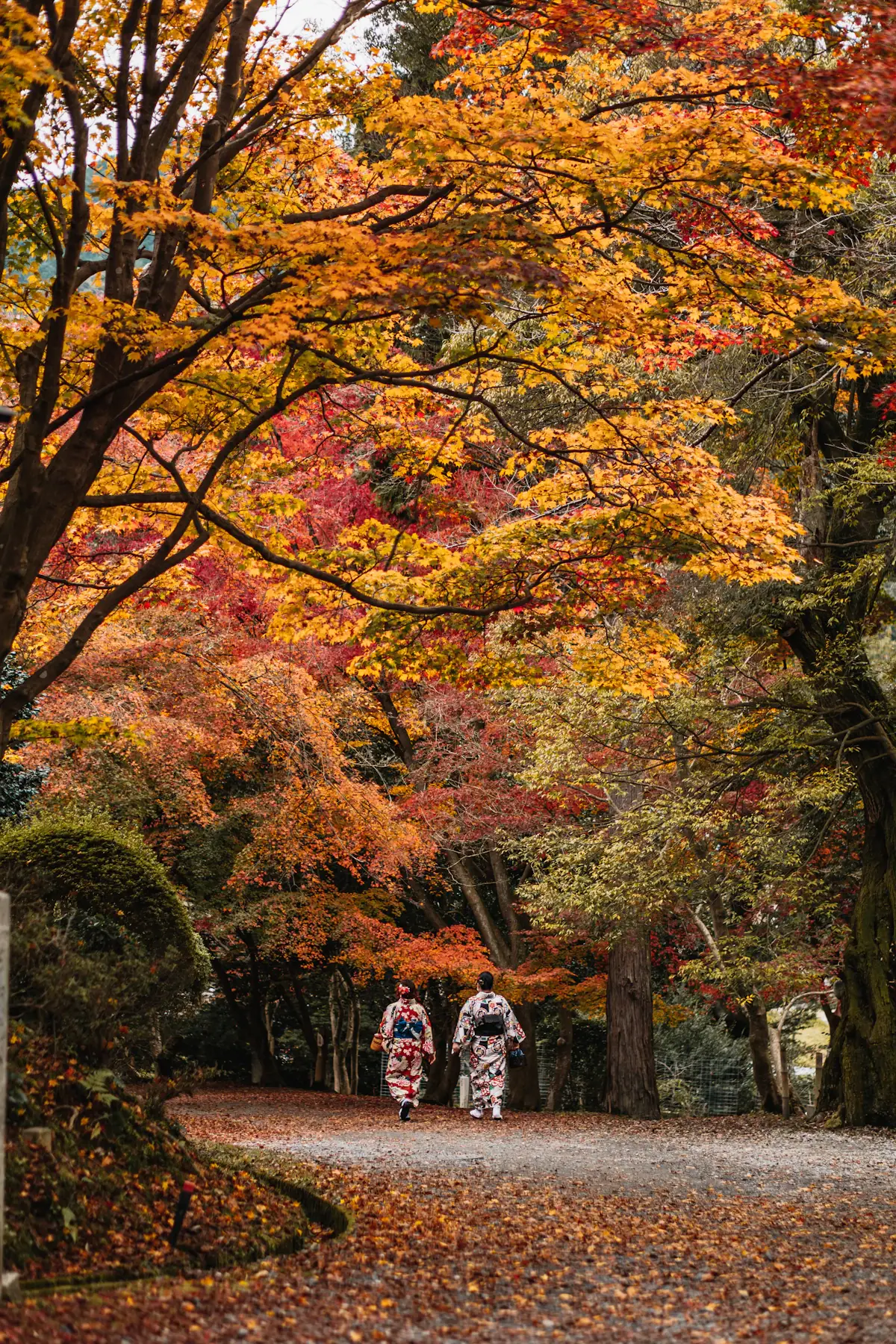
Leave time for the walk itself. Photo: Diana Lisunova / Unsplash.
Days 12–14: Osaka and departure
Use Osaka for a different pace: neighbourhoods, food and a final full day without another long-distance transfer. If your flight leaves Tokyo, build the return journey and a sensible buffer into the plan. Airports, terminals and rail services are not interchangeable.
A useful packing list from Germany
Pack layers: a light top, something warm and a weather-resistant outer layer. Comfortable shoes matter when days involve stations, steps and gardens. Higher elevations can need warmer clothing than a sunny afternoon in Osaka.
Keep a power bank, suitable plug adapter and charging cable accessible. Download large apps, language packs and entertainment before departure. Save confirmations, addresses and the first transfer as screenshots or PDFs. An offline map does not necessarily contain a usable offline rail itinerary.
How much mobile data for two weeks?
5 GB may suit lighter use: navigation, messages and translation, with photo backups and video on accommodation Wi-Fi. 10 GB offers more room for a two-week route with frequent searches and photo uploads. These are planning examples, not consumption guarantees. Video, cloud backups and a laptop on a hotspot can change the total substantially.
Disable automatic photo uploads over mobile data and download shows before the flight. Two people sharing a hotspot consume one allowance; people exploring separately need their own connection. Our Japan data guide works through more examples.
Match validity to the final transfer. A seven-day offer will not cover two weeks. The current Japan plans show the allowance, validity and total price together.
Horizon, Airalo and Holafly: the actual comparison
Public EUR prices checked on 9 October 2026, excluding coupons, partner discounts and rewards. Horizon costs less than Airalo for these two matched allowances and validity periods:
| Total data and validity | Horizon | Airalo | Difference |
|---|---|---|---|
| 5 GB, 15 days | €4.69 | €10.00 | Horizon costs €5.31 less |
| 10 GB, 30 days | €7.74 | €16.50 | Horizon costs €8.76 less |
Airalo source: the standard packages on its official Japan page. This is a price advantage for the specified offers on the check date, not evidence of better reception or faster data.
Holafly lists unlimited phone data at €46.90 for 15 days and €68.90 for 30 days, with 1 GB per day of hotspot sharing on the checked page. Unlimited phone data can be useful for heavy use. A fixed allowance can be sufficient for maps, messages and occasional uploads. The products are different, so we do not present a percentage saving as though the allowances were equivalent.
Horizon includes free hotspot sharing from your purchased allowance.
Horizon plans have no throttling.
Actual speed and reception still depend on the device, location and network conditions. Read the full Japan provider comparison for other providers and smaller or larger data needs.
Install before flying; select the right line on arrival
- Check eSIM compatibility and that the phone is unlocked. Install over dependable Wi-Fi at home.
- Label the lines clearly, such as Home and Japan. Keep the instructions accessible without mobile data.
- In Japan, select the travel eSIM for mobile data and enable its data roaming as instructed. Disable data roaming and automatic data switching on your German home line.
- Open a webpage and check the first transfer before leaving airport Wi-Fi. Do not delete the eSIM as an initial troubleshooting step; use the Japan setup guide or Horizon support.
Validity does not start until your Horizon eSIM first connects to a supported mobile network at your destination. Installing it does not start its validity. You can keep your usual WhatsApp number. Ordinary calls and SMS on the home SIM remain subject to your home operator's Japan charges.
Questions before you go
Is October too early for autumn leaves?
Not everywhere. Northern and higher regions can turn earlier; October is often early for red maples in Tokyo and Kyoto. Use regional reports rather than treating Japan as one climate.
Do I need unlimited data for 14 days?
No. It depends on use. A fixed allowance can work when large downloads stay on Wi-Fi. Frequent video or laptop tethering changes the calculation; check hotspot terms and validity too.
Will data work continuously on the Shinkansen?
There is no such guarantee. Tunnels, mountains and other network conditions can interrupt reception. Save tickets, addresses and onward connections before boarding.
What if I am unhappy with my Horizon eSIM?
Horizon refunds the full amount paid on request, including partly or fully used eSIMs, with no request deadline. See the refund policy. Human support is available 24/7 in all languages with guaranteed instant replies; a reply does not imply immediate resolution or bank settlement.
Editorial owner: Lurian Kasumaj, Horizon. This is our proposed itinerary informed by the linked official travel guidance, not a network field test or a live foliage forecast. Photographs show earlier autumn scenes. Check current opening arrangements, transport and the selected plan before booking.
Cover photo: Hat Trick / Unsplash.
