


EN
“I used the Europe Esim, went through different countries with it and it was working super fast 5G everywhere. Suprised for good!” 




“I used the Europe Esim, went through different countries with it and it was working super fast 5G everywhere. Suprised for good!” “The eSIM worked perfectly during my trip around Europe. It was very easy to install, connected as soon as I arrived, and the internet was fast and reliable everywhere I went. It made travelling much easier because I did not need to buy local SIM cards. Very convenient and worth the price. I would definitely use it again.” Compare Sweden eSIM plans for Stockholm and its islands, Gothenburg and the Bohuslän coast, Malmö across the Öresund, and the Arctic north around Kiruna. Set the allowance against the days spent underground on the deep Blue Line and out among the Bohuslän skerries, then read the territory and hotspot rules printed on the offer.
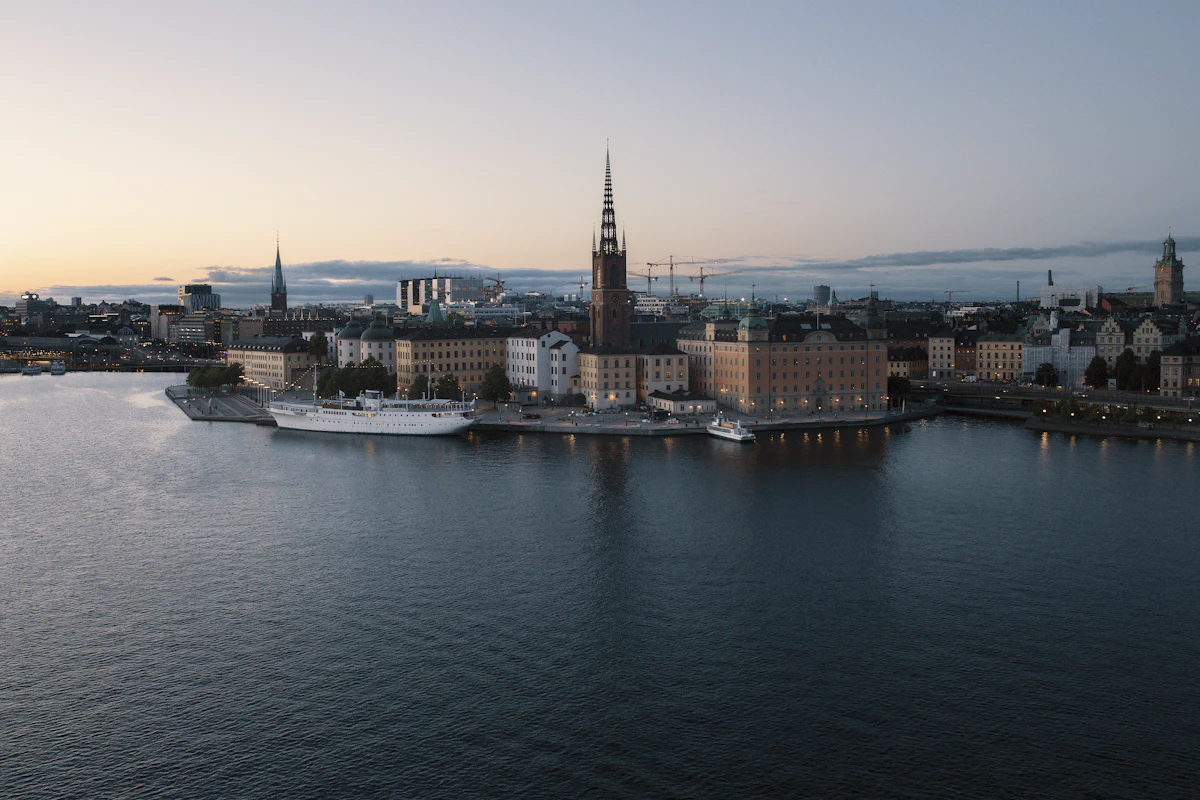
Sweden is really two trips wearing one name. In the south it is water and rail: Stockholm spreads across fourteen islands, its Tunnelbana covering some 106 kilometres and more than a hundred stations, with the deep Blue Line cut straight into bedrock at Kungsträdgården, Rådhuset and Solna centrum. Gothenburg opens onto the Bohuslän archipelago, thousands of islands and skerries reached by boat, and Malmö sits an Öresund crossing from Denmark. Then the country keeps going north to Kiruna and Abisko, above the Arctic Circle, where towns are far apart and the road between them is mostly forest. What the handset can reach shifts with the bedrock overhead, the water in between and the distance to the next settlement, so keep the ferry time, the trailhead and the address saved before you need them.
Refund policy
Get a full refund within 7 days if no data is used, even after installation. If it doesn't work and we can't fix it, we refund you.
Activation window
Check the package details for the first-use deadline and validity rules.
Secure checkout
Cards, Apple Pay & Google Pay — encrypted by Paysera.
Customer support
Contact support before or during your trip if you need help.
Get the Sweden profile onto the phone before the flight, using a connection you already trust, and store the order paperwork somewhere separate. Each plan states the point at which it takes over as the data line; use that instruction and ignore generic advice. Arlanda is the first test, roughly 40 kilometres out, with the airport express reaching Stockholm Central in under twenty minutes and coaches running to Cityterminalen. Have the onward ticket open before boarding, and leave the home contract's data off unless you have decided to be billed for it.
Pick a destination, data allowance and validity period.
Scan the QR or auto-install in the app — no physical SIM.
Data activates on first connection at your destination.
Pick the profile closest to your trip. The estimate assumes normal use — maps, messaging, photos, a short call home.
As a rule of thumb, a 3–4 day city break runs on about 1–3 GB, a one-week trip on 3–5 GB, a two-week multi-country tour on 8–12 GB, and working on the road takes about 1 GB a day, so 15 GB or more for two weeks.
In total, a 5 GB data allowance covers roughly 1,700 shared photos, 83 hours of social media and browsing, 15 hours of video calls, 63 hours of music streaming, or about 1000 hours of maps and navigation. Messaging apps barely use data.
Stockholm · City guide
Stockholm spreads across fourteen islands linked by bridges, with Gamla Stan and the Royal Palace, the Vasa Museum and the Skansen open-air museum among the fixed points. Its Tunnelbana runs roughly 106 kilometres over more than a hundred stations, most of them decorated, and the deep Blue Line is cut into bedrock at Kungsträdgården, Rådhuset and Solna centrum. The archipelago starts at the quayside: ferries run from Strömkajen and Slussen out toward Vaxholm in about an hour. Load the boat time and the museum booking above ground.
Stockholm eSIM — set up before you fly →Gothenburg · City guide
Gothenburg holds the Liseberg amusement park, the Universeum science centre and the seventeenth-century Haga district of cobbled lanes and wooden houses, and it is the way into the Bohuslän archipelago, roughly three thousand islands plus thousands more islets and skerries running north toward the Norwegian border. Landvetter Airport sits about 25 kilometres east with a coach into the centre in roughly half an hour. Island days are boat days, so download the timetable and the return crossing while still on the mainland.
Gothenburg eSIM — set up before you fly →Malmö · City guide
Malmö is flat and walkable, with the 190-metre Turning Torso by Santiago Calatrava, Malmöhus Castle dating from 1434 and now holding art, natural history and an aquarium, and the Ribersborg beach with its open-air bathhouse. It is also the Swedish end of the Öresund fixed link: trains reach Copenhagen Airport in about twenty minutes, which makes this the one Swedish city where an ordinary day can cross an international border twice. Confirm which country the phone is registered in before assuming the plan still applies.
Malmö eSIM — set up before you fly →Kiruna and Abisko · City guide
Kiruna sits above the Arctic Circle, with the Icehotel at Jukkasjärvi about 17 kilometres away and rebuilt in snow and ice each year, and Abisko National Park roughly 95 kilometres further on. The town centre is being physically relocated, so confirm current addresses rather than trusting an old pin. Midnight sun runs from late May to mid-July and polar night through much of December, while the aurora season spans September to March. Northern-lights trips leave the lit streets for empty valleys, so carry the pickup point, the return time and a torch offline.
Kiruna and Abisko eSIM — set up before you fly →Why Horizon
The two halves of Sweden ask different things of a plan. A southern week of Stockholm, Gothenburg and Malmö is dense and short-hop, with museums booked ahead and ferries to check; the far north is the opposite, long empty legs where a single missed detail costs an evening. Stockholm to Kiruna is roughly fifteen hours by rail or a domestic flight, so decide early whether the north is in the trip at all, then size validity around it. If the itinerary slips over the Öresund to Copenhagen or west to Oslo, look for Denmark or Norway by name on the offer's own destination list rather than assuming a Nordic label covers them.
Plan for
Sweden
Compare the listed data allowances and validity periods for your destination.
Install over reliable Wi-Fi before departure and follow the plan's activation instructions.
Review the current price, data, validity, coverage and fair-use terms before checkout.
When the selected plan supports reuse or top-ups, My eSIMs shows the eligible options for the installed profile.
We'll alert you as you approach your limit. If the plan supports a top-up, My eSIMs shows the eligible options.
Choose country, regional or global coverage and check every destination in the plan details.
Four or five days covers Stockholm properly, including Gamla Stan, the Vasa Museum, Skansen and one archipelago day. A week stretches comfortably to Gothenburg and Malmö by train. The north is a separate decision rather than an add-on: Stockholm to Kiruna is roughly fifteen hours by rail or a domestic flight, so treat Kiruna and Abisko as three or four days of their own, ideally in the aurora season.
The season runs from September to March and is strongest between December and February, centred on Kiruna and Abisko above the Arctic Circle. The same latitude brings polar night through much of December and midnight sun from late May to mid-July, so the summer trip and the aurora trip are genuinely different holidays. Viewing runs go well away from lit roads into open valleys, which is why the pickup point and return time are worth having offline before setting out.
Both, because the city is built across fourteen islands. Gamla Stan and the central districts walk easily, but Djurgården for the Vasa Museum and Skansen, and anything in the archipelago, mean a boat or a metro ride. The Tunnelbana covers roughly 106 kilometres over more than a hundred stations and many people ride it as sightseeing in its own right, since most stations are decorated. Load tickets and bookings before descending, as the deep Blue Line sits in bedrock.
Yes, though the season is short and the water is cool. The best-known stretches are Tofta on Gotland, Böda Sand along the north-east of Öland, Sandhammaren on the Österlen coast of Skåne, and Ribersborg in Malmö with its open-air bathhouse. The Bohuslän coast north of Gothenburg and the Stockholm archipelago are more about rocks, swimming spots and boat days than long sand. Late June to late August is the window, and Midsummer in particular empties the cities toward the coast and countryside.
Rail handles the southern triangle comfortably. Stockholm to Gothenburg takes roughly three and a half to four hours with hourly departures, Gothenburg to Malmö a little over two, and Stockholm to Malmö about four and a half direct. A car earns its place mainly on the Bohuslän coast and in the far north, where distances open out and services thin. Kiruna to Abisko is about 95 kilometres and can be done by road or on the same rail line that continues toward Norway.
Only if Denmark or Norway is named on the plan's own destination list. This matters more in Sweden than in most places because the crossings are so ordinary: Malmö to Copenhagen Airport takes about twenty minutes over the Öresund link, Gothenburg and Stockholm both have direct trains to Oslo, and the rail line through Abisko carries on to Narvik. A Nordic-sounding label is not the list, so read the list and compare a regional package against separate country plans before travelling.
Arlanda and the express platform both have Wi-Fi, so start there and open the setup guide that came with the plan itself. Check two things in order: that the Sweden profile is enabled at all, and that it is the line assigned to mobile data. Then follow the plan's stated sequence for roaming, network selection and APN without improvising. Restarting helps only where that guide says so. If it still fails, keep the profile installed and send support the order reference, the handset model and a screenshot of the data settings.