




No. Switzerland belongs to neither the European Union nor the European Economic Area, so the EU roaming regulation, better known as roam like at home, does not apply there. Whether your phone costs extra in Zermatt or on the Glacier Express is your operator's decision: some EU tariffs include Switzerland by choice, others price it outside the EU allowance, and UK or non-European plans follow their own terms. The exception sits next door: Liechtenstein is in the EEA, so the EU rules apply there.
Before a winter trip, read your tariff rather than the rule. Find the line on your operator's roaming page that names Switzerland, not a zone called Europe, and read its terms for data. If Switzerland is included, your home plan may be enough. If it is charged separately or missing, decide before you leave: accept those terms, or turn data roaming off on the home line and carry the trip's data on a Switzerland eSIM.
Why the EU rule stops at the Swiss border
Roam like at home has applied since 15 June 2017: a plan from one EU country works in the others at domestic prices, within fair use, and a regulation in force since 1 July 2022 extends it until 2032. The European Commission's Your Europe page on roaming adds Iceland, Liechtenstein and Norway, and since 1 January 2026 Moldova and Ukraine. Switzerland is not on the list; other countries, the page says, are not covered, although many operators choose to extend their offers to them.
Nothing on the Swiss side fills the gap. Switzerland's Federal Office of Communications notes that Swiss law would allow retail roaming prices to be capped if an international agreement regulated wholesale prices, and that no such agreement exists. In August 2025 the Federal Council told parliament that the time was not right to negotiate joining the EU scheme. For this winter, your contract decides. If your trip stays inside the EU, when EU roaming is enough covers that side of the line.
Who is affected, plan by plan
- EU and EEA plans. Read the country list, not the zone name. Some operators count Switzerland inside their Europe allowance; others sell a day pass or an add-on, or charge by use, and that can change with the next tariff.
- UK plans. Since the UK left the EU, even France is not guaranteed at home prices, and the UK government advises checking your operator's roaming policy before travelling. Switzerland is one more line in it.
- Plans from outside Europe. From North America, the Gulf or Asia, Switzerland is priced like any other international destination on your tariff.
- Swiss plans heading out. The gap runs both ways: a Swiss contract gets no EU treatment in France, Germany, Italy or Austria.
Skiers bound for France who fly into Geneva should check too: Chamonix's tourist office calls Geneva Airport one of the main hubs for the valley, and the first stretch of that transfer is Swiss.
The border trap: a Swiss network outside Switzerland
Radio signals ignore customs posts. The federal office describes the effect from the Swiss side: in border regions, a phone with a Swiss SIM can switch to a foreign network. It works in reverse too. German consumer advice centres warn that on Lake Constance many Swiss masts stand right on the shore, and their signal can carry over the water to the German side. A welcome text from a Swiss network while you are still in Konstanz is the usual first sign.
The same can happen around Basel, where France, Germany and Switzerland meet; around Geneva, which France almost surrounds; on the Italian shores of Lake Lugano and Lake Maggiore; and in the Rhine valley on the Austrian border. On skis, the border can run between two lifts: the Portes du Soleil links French resorts such as Avoriaz with Swiss ones such as Champéry and Morgins, the Matterhorn ski area reaches from Zermatt to Cervinia in Italy, and the Silvretta Arena joins Ischgl in Austria with Samnaun.
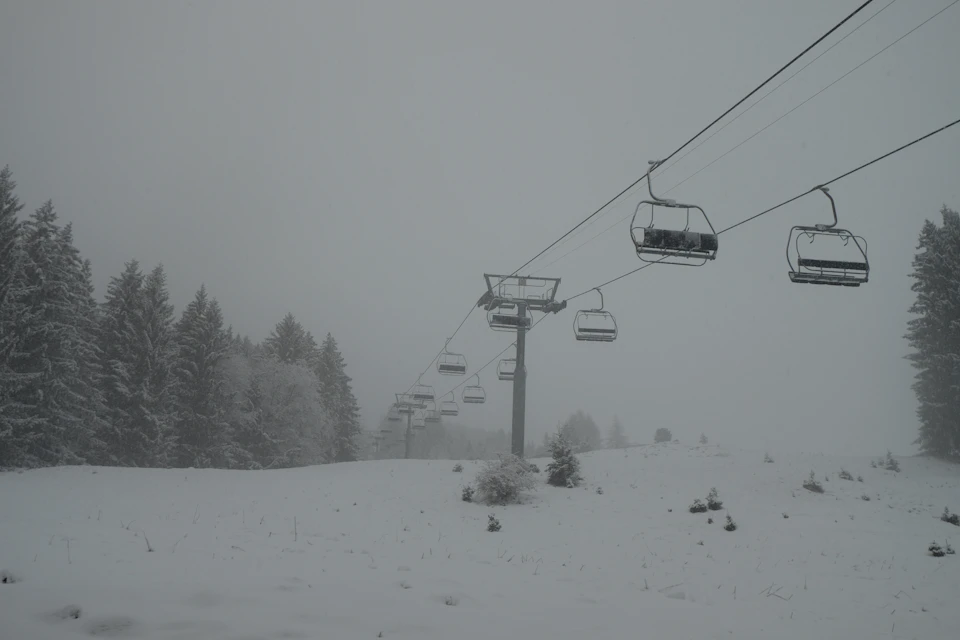
- Check the network name. The status bar or the line's settings show the network in use; a Swiss name while you stand in Germany, France, Italy or Austria is the trap.
- Pick the network by hand near the border, as German consumer advice centres recommend: turn automatic selection off for the line and choose a network of the country you are in (on an iPhone under Network Selection in the line's settings, on Android in the SIM settings, often as Network operators), then turn it back on when you leave.
- Or take the home line's data out of the question. With data roaming off on the home line and the data on a travel line whose plan lists every country you visit, the home line carries no data wherever it registers; its calls and texts still follow your operator's terms.
What a ski day asks of a phone
A ski day uses little data and a lot of battery. The traffic is mostly small: the lift pass and resort app, the piste map, webcams at the top station, the MeteoSwiss mountain forecast, the SBB Mobile app for the train home, and in the evening the SLF avalanche bulletin, published daily at 5 pm in winter. Photos, video and calls home from the chalet move the counter.
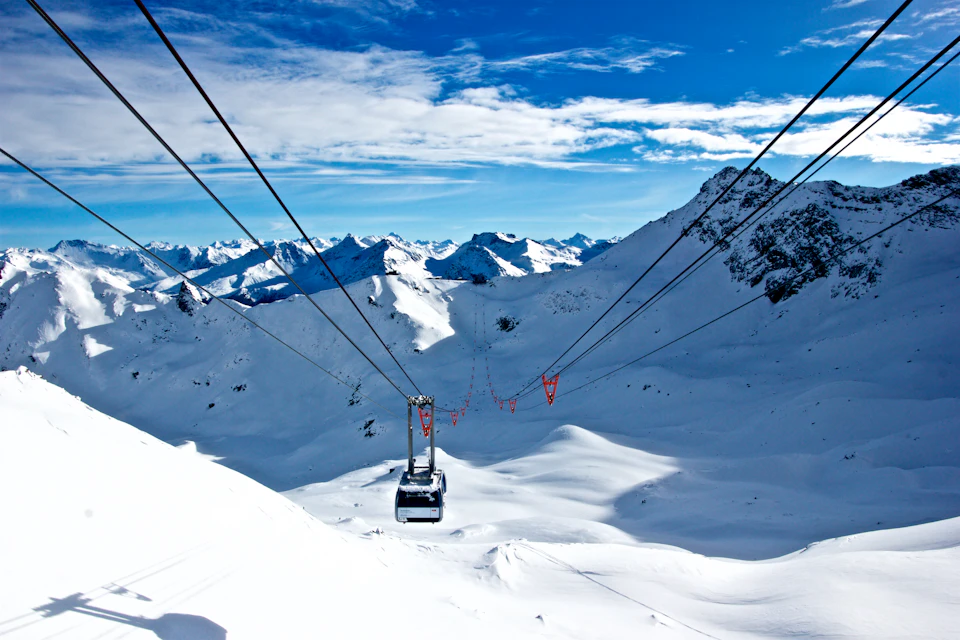
Deep valleys and long tunnels can interrupt the signal on any network, whatever the plan; the Glacier Express, by its operator's count, runs through 91 tunnels between Zermatt and St. Moritz. If a high valley puts SOS in the status bar, why a phone shows SOS explains what it means and what to do. Save the piste map, hotel address and train times offline before you go up.
Cold is the other limit. Apple designs the iPhone for ambient temperatures between 0 and 35 degrees Celsius and warns that severe cold can shorten battery life for a while or switch the phone off. Keep it in an inside pocket, carry a power bank, and do not trust the percentage at the top station.
Emergency numbers in the Swiss mountains
112 works in Switzerland, as it does in the EU. Save the Swiss numbers as well: 144 for an ambulance, 117 for the police, 118 for the fire service and 1414 for Rega's air rescue. Rega's app sends your position with the alarm call if the phone has at least a minimal mobile connection. A data-only travel eSIM makes no ordinary calls, so leave the home line active for calls and texts; turning its data roaming off affects data, not calls.
A Switzerland plan or a Europe plan
For a trip that stays in Switzerland, a Switzerland eSIM puts the data on a line bought for the country, whatever your home tariff says about it. A ski week of maps, lift apps, messages and a few video calls usually fits in the 10 GB plan over seven days; the page lists the current sizes. The plan is sold for Switzerland alone, so do not assume it covers Liechtenstein or the far side of a shared ski area.
For a trip that also enters France, Italy, Austria or Germany, the Europe eSIM names Switzerland on its current country list, together with Liechtenstein and those four neighbours. Typical pairings: Geneva and a week in Chamonix, Zermatt with a day in Cervinia, Samnaun with the lifts to Ischgl. Read the list on the page before you buy.
Install at home, switch the line on after the border
- Install on home Wi-Fi, days ahead, with the installation guide. Keep the order email, with its manual details, off the phone you are setting up.
- Leave the travel line off until you are across the border or out of the airport. Its validity does not start until the eSIM first connects to a supported network in Switzerland, so leaving it off costs no days.
- Then set the lines. The travel line takes mobile data and is the only line with data roaming on; the home line loses its mobile data and stays on for calls and texts.
- Check the network name at the first stop. If it belongs to the wrong side of a border, manual selection works on the travel line too.
Short answers
Is Switzerland part of EU roaming? No. It is outside the EU and the EEA, so roam like at home does not apply; any Swiss allowance in an EU tariff is the operator's choice.
Does EU roaming apply in Liechtenstein? Yes. Liechtenstein is in the EEA, so an EU or EEA plan is treated there as in the rest of the zone.
Will my EU plan charge extra in Switzerland? That depends on your tariff. Read the line that names Switzerland before the trip.
Why did I get a Swiss welcome text in Germany? Your phone registered on a Swiss network across the border. Choose a local network by hand until you leave the area.
Which numbers do I call in an emergency? 112 works in Switzerland; 144 is the ambulance and 1414 is Rega, the air rescue.
Which eSIM suits a ski trip? A Switzerland plan for a Swiss-only trip; the Europe plan when the trip also enters France, Italy, Austria or Germany, after checking its current list.
Hotspot sharing is free on every Horizon plan.
