



EN
“I used the Europe Esim, went through different countries with it and it was working super fast 5G everywhere. Suprised for good!” 




“I used the Europe Esim, went through different countries with it and it was working super fast 5G everywhere. Suprised for good!” “The eSIM worked perfectly during my trip around Europe. It was very easy to install, connected as soon as I arrived, and the internet was fast and reliable everywhere I went. It made travelling much easier because I did not need to buy local SIM cards. Very convenient and worth the price. I would definitely use it again.” There is no deadline for first use. You can buy now and keep your plan for a future trip.
Compare Poland eSIM plans for Warsaw and Kraków, the Gdańsk shipyard and the Wrocław market square, and for a week on the Baltic if the trip runs that way. Set the number of days against the allowance first, then read the listed territory printed on the offer itself.
Poland is a country of long train rides between compact old towns. Warsaw sits roughly in the middle, Kraków about 295 kilometres to the south, Gdańsk about 340 kilometres north on the Baltic, and Wrocław about 345 kilometres to the south-west. Fast intercity services join them, which is why very few visitors drive that circuit. What interrupts a signal here is rarely distance: it is the deep metro sections under Warsaw, the galleries at Wieliczka that run hundreds of metres below ground, the forested park roads near Łeba and Międzyzdroje, and the narrow sand spit of the Hel Peninsula with open water on both sides. Download tickets and maps before those stretches, not during them.
Refund policy
We always refund the full amount you paid when you request it, whether your eSIM is unused, partly used or fully used. There is no time limit for requesting a refund.
No first-use deadline
Validity does not start until your eSIM connects to a supported network at your destination. There is no deadline for first use. You can buy now and keep your plan for a future trip.
Secure checkout
Cards, Apple Pay & Google Pay — encrypted by Paysera.
24/7 support in all languages
Instant replies guaranteed.
Set the Poland profile up at home, over a connection you already have, and keep the confirmation somewhere other than the handset you are installing it on. The offer tells you at which step it becomes the data line; follow that wording rather than guessing. Warsaw Chopin is about ten kilometres south of the centre, with a train from Warszawa Lotnisko Chopina station in around twenty minutes, and Kraków's airport is about eleven kilometres west with a direct train to Kraków Główny in roughly the same time. Turn the home contract's data off before you land unless being billed for it is a choice you have made.
Pick a destination, data allowance and validity period.
Scan the QR or auto-install in the app — no physical SIM.
Data activates on first connection at your destination.
Pick the profile closest to your trip. The estimate assumes normal use — maps, messaging, photos, a short call home.
As a rule of thumb, a 3–4 day city break runs on about 1–3 GB, a one-week trip on 3–5 GB, a two-week multi-country tour on 8–12 GB, and working on the road takes about 1 GB a day, so 15 GB or more for two weeks.
In total, a 3 GB data allowance covers roughly 1,000 shared photos, 50 hours of social media and browsing, 8.8 hours of video calls, 38 hours of music streaming, or about 600 hours of maps and navigation. Messaging apps barely use data.
Warsaw · City guide
Warsaw rebuilt its Old Town around Rynek Starego Miasta and the Royal Castle, and keeps its other set pieces spread out: Wilanów Palace to the south, Łazienki Park with the Palace on the Isle, and the Warsaw Uprising Museum west of the centre. Moving between them means the metro, and the deeper platforms and running tunnels are where a data session quietly drops. Chopin Airport lies about ten kilometres south, roughly twenty minutes away by train.
Warsaw eSIM — set up before you flyKraków · City guide
Kraków packs Wawel Castle and Cathedral, the Main Market Square with the Cloth Hall at its centre, and the Kazimierz quarter into a core you can cross on foot. The Wieliczka salt mine sits just outside the city and is the one attraction that takes you far underground, into galleries hundreds of metres down, so treat it as offline time and save what you need first. The airport is about eleven kilometres west, twenty minutes by direct train to Kraków Główny.
Kraków eSIM — set up before you flyGdańsk · City guide
Gdańsk lines Długi Targ with merchant houses, Neptune's Fountain and St. Mary's Church, then hands you the twentieth century at the shipyard, where the European Solidarity Centre stands, and at the Westerplatte memorial site. The SKM commuter train runs in from Lech Wałęsa Airport, about twelve kilometres out, in twenty-five to thirty minutes by way of Gdańsk Wrzeszcz. North of the city the Hel Peninsula narrows to a spit with the bay on one side and open sea on the other.
Gdańsk eSIM — set up before you flyWrocław · City guide
Wrocław builds outward from a Rynek held by the Old Town Hall, over the bridges to Ostrów Tumski and its cathedral, and east to Centennial Hall. The small bronze dwarf statues scattered through the centre turn an afternoon into a search, and the phone map does much of that work. Copernicus Airport is about ten kilometres away, but this is the one city on the circuit with no direct rail link into the centre — the bus takes twenty-five to thirty minutes.
Wrocław eSIM — set up before you flyWhy Horizon
Match the days to the shape of the trip. Kraków on its own works in two or three days; Warsaw and Kraków together want five or six; adding Gdańsk or Wrocław pushes it towards eight to ten, and a good share of those hours is spent on a train. May, June and September give mild weather with thinner crowds, July and August give the warmest days and the only realistic Baltic swimming, and December brings the Christmas markets in Kraków and Wrocław. Poland is in the EU and the Schengen area, so the borders are easy to cross — but an offer written for Poland does not automatically follow you into Czechia, Slovakia, Germany or Lithuania. Read the territory line before you assume it does.
Plan for
Poland
Compare the listed data allowances and validity periods for your destination.
Install over reliable Wi-Fi before departure and follow the plan's activation instructions.
Review the current price, data, validity and coverage before checkout. Horizon plans have no throttling.
When the selected plan supports reuse or top-ups, My eSIMs shows the eligible options for the installed profile.
We'll alert you as you approach your limit. If the plan supports a top-up, My eSIMs shows the eligible options.
Choose country, regional or global coverage and check every destination in the plan details.
Base in Kraków if the trip is about the Old Town, Wawel and the day trips that leave from it — the Wieliczka salt mine and the Auschwitz-Birkenau Memorial both start there. Base in Warsaw for a capital-city stay with the Royal Castle, Wilanów, Łazienki Park and the Uprising Museum, and for the widest choice of onward trains. Gdańsk is the third answer and the right one if the Baltic is the point. Kraków alone fills two or three days; Warsaw and Kraków together take five or six.
For those four cities the train is the obvious choice, and the fast intercity network is why. Warsaw to Kraków is about 295 kilometres in roughly two and a quarter to two and a half hours; Warsaw to Gdańsk about 340 kilometres in two and three-quarter to three hours; Warsaw to Wrocław about 345 kilometres in anything from two and a half to four, against three and a half to four hours of driving. Gdańsk to Kraków is the outlier at roughly 580 kilometres, better flown or taken overnight.
Kraków on its own works in two or three days. Warsaw and Kraków together want five or six, because a travel day disappears into the train between them. Adding Gdańsk or Wrocław takes the trip to eight or ten. The Tatra mountains near Zakopane, a common side trip from Kraków, are a further day on winding mountain roads. Under a week you are really choosing one city and its day trips rather than seeing the country.
Both are day trips from Kraków, but pairing them makes a long day. The Auschwitz-Birkenau Memorial is about 70 kilometres away, roughly an hour and a quarter each way, and once travel is counted it takes most of a day. The Wieliczka salt mine is a half-day just outside the city, with an extensive underground route through galleries hundreds of metres down. Give each its own date if the calendar allows; if it does not, take the mine in the morning and the memorial on another day.
May, June and September are the usual answer: mild weather and fewer people on the Kraków market square. July and August bring highs of about 24-26°C and are the only months the Baltic coast really works. December stands on its own, with Christmas markets in Kraków and Wrocław. January and February sit around 0-2°C with lows below freezing and snow inland and in the south, which makes them the Zakopane season rather than the old-town one.
Yes. Gdańsk and Sopot sit in the same Tricity area, and the Hel Peninsula is a straightforward day out from either. Sopot has the resort beach and its wooden pier, Gdańsk has Brzeźno and Stogi, and the peninsula is a narrow spit with sand on both the bay side and the open sea side. The catch is the water: roughly 17-20°C in July and August, with a swimming season that essentially runs those two months and sometimes edges into early September.
Poland offers a phone several places to go quiet: the deeper Warsaw metro platforms, the Wieliczka galleries hundreds of metres down, the forest roads near Łeba and Międzyzdroje, and the mountain roads above Zakopane. Come back to open ground first and give the handset a minute to register again. If nothing returns, go back to the instructions that arrived with the order, confirm the Poland profile is enabled and set as the mobile data line, then send support your order number and phone model.
No. Horizon plans have no throttling. There is no daily limit that slows you down, so you can use your whole plan in one day if you need to. Your speed depends on the local network, your signal and how busy the network is. When your data allowance is used up, the plan stops rather than slowing down.
Yes. We always refund the full amount you paid when you request it, whether your eSIM is unused, partly used or fully used. There is no time limit for requesting a refund.
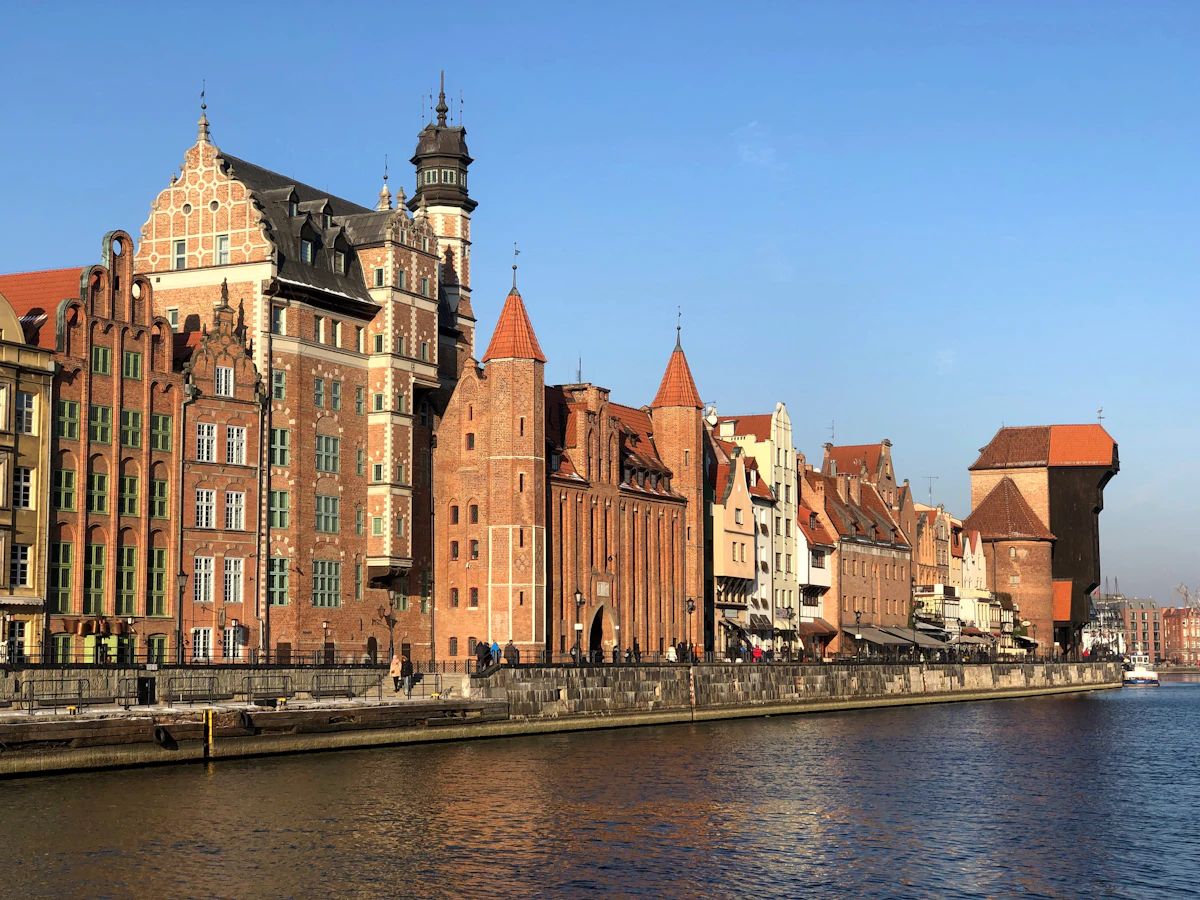
Compare Poland’s 30-day eSIM prices, public sale offers and the cost of adding regional European coverage.
Most Poland trips are longer than most Poland plans. The networks the plans name, why the validity window decides a long stay before the allowance does, and how to size one for a month with family.


