



EN
“I used the Europe Esim, went through different countries with it and it was working super fast 5G everywhere. Suprised for good!” 




“I used the Europe Esim, went through different countries with it and it was working super fast 5G everywhere. Suprised for good!” “The eSIM worked perfectly during my trip around Europe. It was very easy to install, connected as soon as I arrived, and the internet was fast and reliable everywhere I went. It made travelling much easier because I did not need to buy local SIM cards. Very convenient and worth the price. I would definitely use it again.” There is no deadline for first use. You can buy now and keep your plan for a future trip.
Compare Czech Republic eSIM plans for Prague and its castle, the Vltava bend at Český Krumlov, Brno beside the Moravian Karst and the colonnades of Karlovy Vary. Weigh the allowance against a rail-and-bus trip, then read the territory named on the offer.
The obvious assumption about this country is that the train covers everything, and it is only half right — which is why the transport answer here is worth reading before booking. Prague to Brno is 185 to 210 kilometres with the fastest trains at two hours thirty-five, so rail wins outright. But Český Krumlov needs a change at České Budějovice and takes around three and a half hours by train against a direct bus of two hours fifty, and Karlovy Vary is roughly two hours by road against three or more by rail. Pick the mode per leg rather than per country.
Refund policy
We always refund the full amount you paid when you request it, whether your eSIM is unused, partly used or fully used. There is no time limit for requesting a refund.
No first-use deadline
Validity does not start until your eSIM connects to a supported network at your destination. There is no deadline for first use. You can buy now and keep your plan for a future trip.
Secure checkout
Cards, Apple Pay & Google Pay — encrypted by Paysera.
24/7 support in all languages
Instant replies guaranteed.
Set the Czech profile up before departure, over a connection you already trust, and keep the order details off the handset. Whatever step the plan names for becoming the data line, follow that wording — and settle it before the train leaves, not somewhere in the two hours thirty-five between Prague and Brno. One arrival detail catches people out: Václav Havel Airport, roughly fifteen kilometres west of the centre, has no direct rail or metro service. The usual route is trolleybus 59 to Nádraží Veleslavín then metro line A, about forty minutes in total, or the Airport Express coach to Hlavní nádraží in forty to forty-five. The home contract's data stays off unless a bill from it is a choice you have made, and the moment to check that is before trolleybus 59 pulls away, not at the metro change.
Pick a destination, data allowance and validity period.
Scan the QR or auto-install in the app — no physical SIM.
Data activates on first connection at your destination.
Pick the profile closest to your trip. The estimate assumes normal use — maps, messaging, photos, a short call home.
As a rule of thumb, a 3–4 day city break runs on about 1–3 GB, a one-week trip on 3–5 GB, a two-week multi-country tour on 8–12 GB, and working on the road takes about 1 GB a day, so 15 GB or more for two weeks.
In total, a 5 GB data allowance covers roughly 1,700 shared photos, 83 hours of social media and browsing, 15 hours of video calls, 63 hours of music streaming, or about 1000 hours of maps and navigation. Messaging apps barely use data.
Prague · City guide
Prague holds the Castle with St Vitus Cathedral, Charles Bridge, Old Town Square with its Astronomical Clock installed in 1410, the Josefov Jewish Quarter with the Old Jewish Cemetery and Spanish Synagogue, and Petřín Hill with its funicular. The connectivity detail worth knowing is vertical: the metro runs deep, with Náměstí Míru sitting fifty-two to fifty-three metres below street level at the foot of an eighty-seven-metre escalator that takes over two minutes end to end, and line A tunnelling under the Vltava.
Prague eSIM — set up before you flyČeský Krumlov · City guide
Český Krumlov sits inside a tight bend of the Vltava, its UNESCO old town wrapped by the river, with a castle above it carrying a round painted tower and an eighteenth-century Baroque theatre, plus the Cloak Bridge and the Egon Schiele Art Centrum. The streets are steep and dense, which walks beautifully and thins reception the way old centres always do. Getting here is the surprise: the direct bus from Prague takes two hours fifty, while the train needs a change at České Budějovice and runs to about three and a half hours.
Český Krumlov eSIM — set up before you flyBrno · City guide
Brno holds Špilberk Castle, the UNESCO-listed Villa Tugendhat by Mies van der Rohe, the Cathedral of St Peter and Paul and the Capuchin Crypt, and it is the easiest leg in the country: 185 to 210 kilometres from Prague with the fastest trains at two hours thirty-five. On its doorstep is the Moravian Karst, entirely underground — the Punkva Caves tour runs about an hour and includes a motorboat leg on the underground river, and the Macocha Abyss drops 138.5 metres to the upper lake.
Brno eSIM — set up before you flyKarlovy Vary · City guide
Karlovy Vary is the headline spa town, built around the Mill Colonnade — 132 metres long with 124 columns, opened in 1881 and holding five springs inside — and the Vřídlo hot spring, which runs at around seventy-three degrees and jets up to twelve metres. The Diana Lookout Tower has its own funicular. It forms the West Bohemian spa triangle with Mariánské Lázně and Františkovy Lázně. From Prague it is 126 to 130 kilometres and about two hours by road, while trains take three or more.
Karlovy Vary eSIM — set up before you flyWhy Horizon
Prague alone justifies three or four days, and a second city turns that into five to seven. May to June and September are the best months, with July averaging around nineteen degrees and daytime highs of twenty-four to twenty-six, and January hovering between minus one and zero with daytime highs of one to three. Snow in Prague is frequent but light between December and February, while the Krkonoše and Šumava mountains hold it from December into March. Winter has a specific draw — the Christmas markets on Old Town Square and Wenceslas Square — but bring the short days into the plan: at this latitude late December gives about eight hours of daylight against sixteen and a half in late June.
Plan for
Czech Republic
Compare the listed data allowances and validity periods for your destination.
Install over reliable Wi-Fi before departure and follow the plan's activation instructions.
Review the current price, data, validity and coverage before checkout. Horizon plans have no throttling.
When the selected plan supports reuse or top-ups, My eSIMs shows the eligible options for the installed profile.
We'll alert you as you approach your limit. If the plan supports a top-up, My eSIMs shows the eligible options.
Choose country, regional or global coverage and check every destination in the plan details.
Decide per leg, because the answer flips. Prague to Brno is a clear win for rail: 185 to 210 kilometres with the fastest trains at two hours thirty-five. Prague to Český Krumlov goes the other way — the train needs a change at České Budějovice and takes around three and a half hours, while a direct bus does it in two hours fifty. Prague to Karlovy Vary is roughly two hours by road on the D6 against three or more by rail. Kutná Hora is the easy exception: 62 kilometres with trains in fifty-one minutes to an hour and ten, and more than forty a day.
Not by train, which surprises people arriving from other European capitals. Václav Havel Airport sits roughly fifteen kilometres west of the centre and has no direct rail or metro service. The standard route is trolleybus 59 to Nádraží Veleslavín and then metro line A, about forty minutes in total; the Airport Express coach runs direct to Hlavní nádraží in forty to forty-five; and a taxi or car takes thirty to forty minutes. Have the data line working before you pick between them.
Yes for the city itself. A stay of three or four days covers the Castle and St Vitus Cathedral, Charles Bridge, Old Town Square and its 1410 Astronomical Clock, Josefov with the Old Jewish Cemetery and Spanish Synagogue, and Petřín. Five to seven days lets you add a second city without rushing — Brno is the easiest at two hours thirty-five by rail, while Český Krumlov and Karlovy Vary each want most of a day in transit if treated as day trips. Kutná Hora at fifty-one minutes is the one that comfortably fits a half day.
An overnight rewards it more. The direct bus from Prague is two hours fifty each way, so a day trip spends nearly six hours in transit and reaches the town at its busiest. Staying gives you the UNESCO old town inside its tight Vltava bend early and late, when the steep, dense lanes empty out, plus time for the castle with its round painted tower and eighteenth-century Baroque theatre, the Cloak Bridge and the Egon Schiele Art Centrum. Lipno reservoir is a further thirty to forty minutes if you want water.
Kutná Hora is the strongest by transport alone: 62 kilometres with trains in fifty-one minutes to an hour and ten and more than forty departures a day, which makes it a genuine half day rather than a logistics exercise. Karlštejn and Terezín are the other common choices. Karlovy Vary is doable at roughly two hours by road each way, but it earns its keep more as an overnight given the colonnades and the spa triangle. Český Krumlov at two hours fifty each way is the one most people wish they had slept in.
In reservoirs and lakes, and the season is short. Lipno in South Bohemia is the country's largest water body at roughly forty-eight to fifty square kilometres, with beaches and cycle paths and thirty to forty minutes from Český Krumlov. Slapy and Orlík on the Vltava sit south of Prague, Máchovo jezero further north, and the Brno dam serves the second city. Swimming is realistically late June to August at around twenty to twenty-three degrees. The spa towns are the year-round alternative, but that is drinking cures and thermal bathing rather than a beach.
Entirely, and this country gives you more chances than most to notice it. Prague's metro runs deep — Náměstí Míru is fifty-two to fifty-three metres below street level at the foot of an eighty-seven-metre escalator, and line A passes under the Vltava. The Blanka complex is about five and a half kilometres of urban road tunnel. The Moravian Karst tour is entirely underground, an hour long and including a motorboat leg on an underground river. Judge the plan at street level. If it still fails there, use Wi-Fi to reopen the plan's own setup guide, confirm the Czech profile is enabled and set as the mobile-data line, and give support the order reference and handset model.
No. Horizon plans have no throttling. There is no daily limit that slows you down, so you can use your whole plan in one day if you need to. Your speed depends on the local network, your signal and how busy the network is. When your data allowance is used up, the plan stops rather than slowing down.
Yes. We always refund the full amount you paid when you request it, whether your eSIM is unused, partly used or fully used. There is no time limit for requesting a refund.
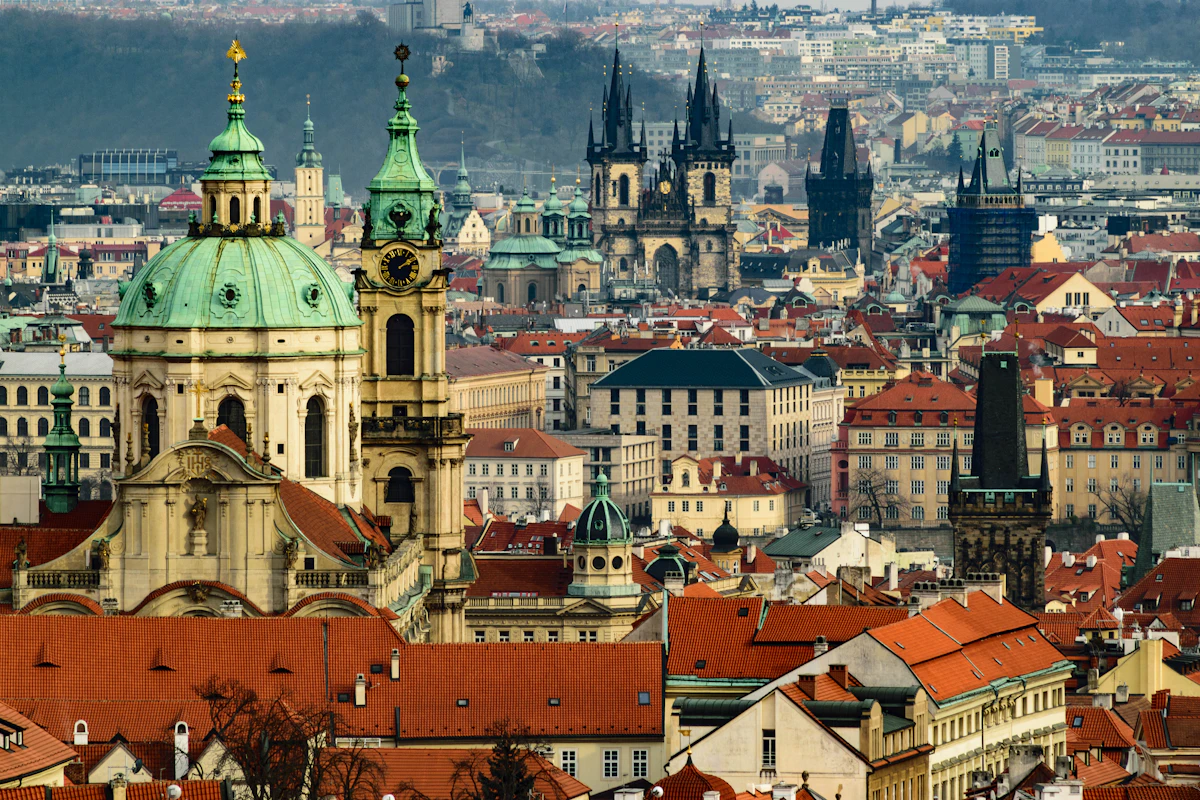
Compare Czech Republic eSIM prices from Horizon, Saily, Airalo, Ubigi, Nomad and Holafly, with EU roaming context, Prague day trips and instant Horizon support.
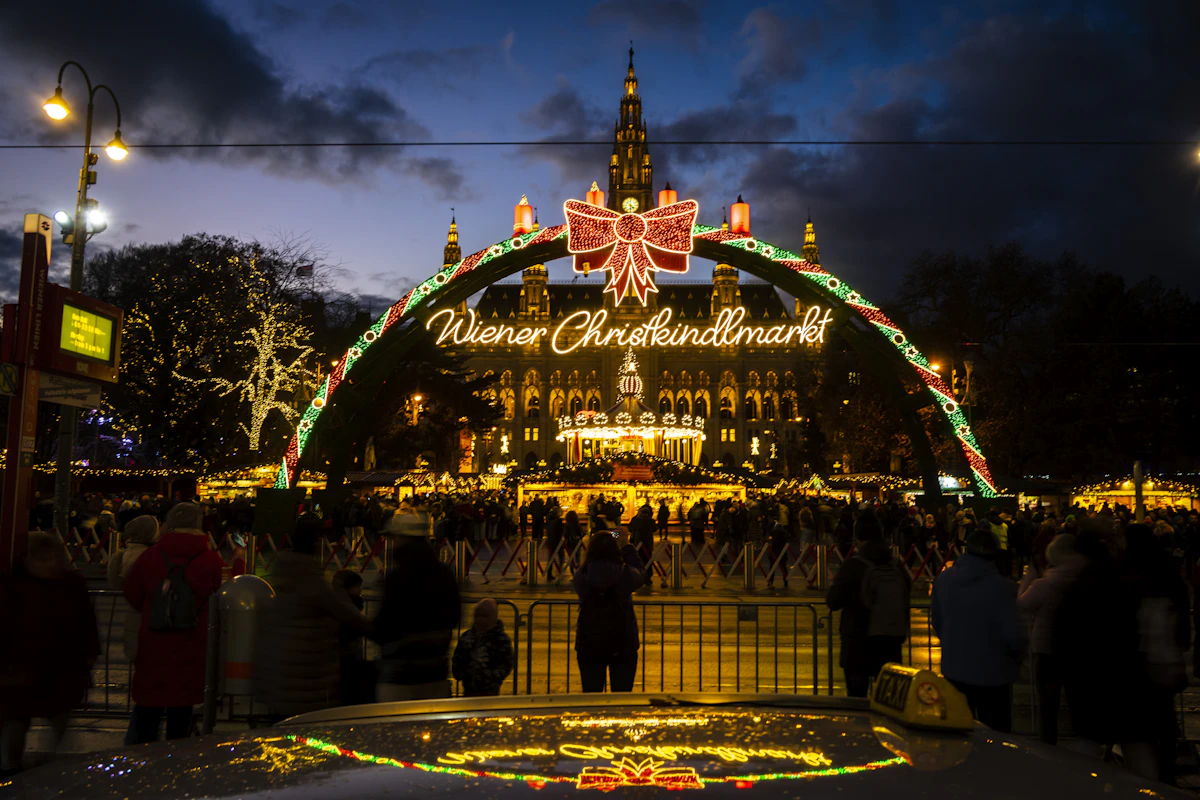
Opening and closing dates for the big 2026 Christmas markets in Nuremberg, Dresden, Munich, Cologne, Berlin, Stuttgart, Aachen, Vienna, Salzburg and Prague, checked on official sites, with the train pairings and the phone habits that help on a market trip.
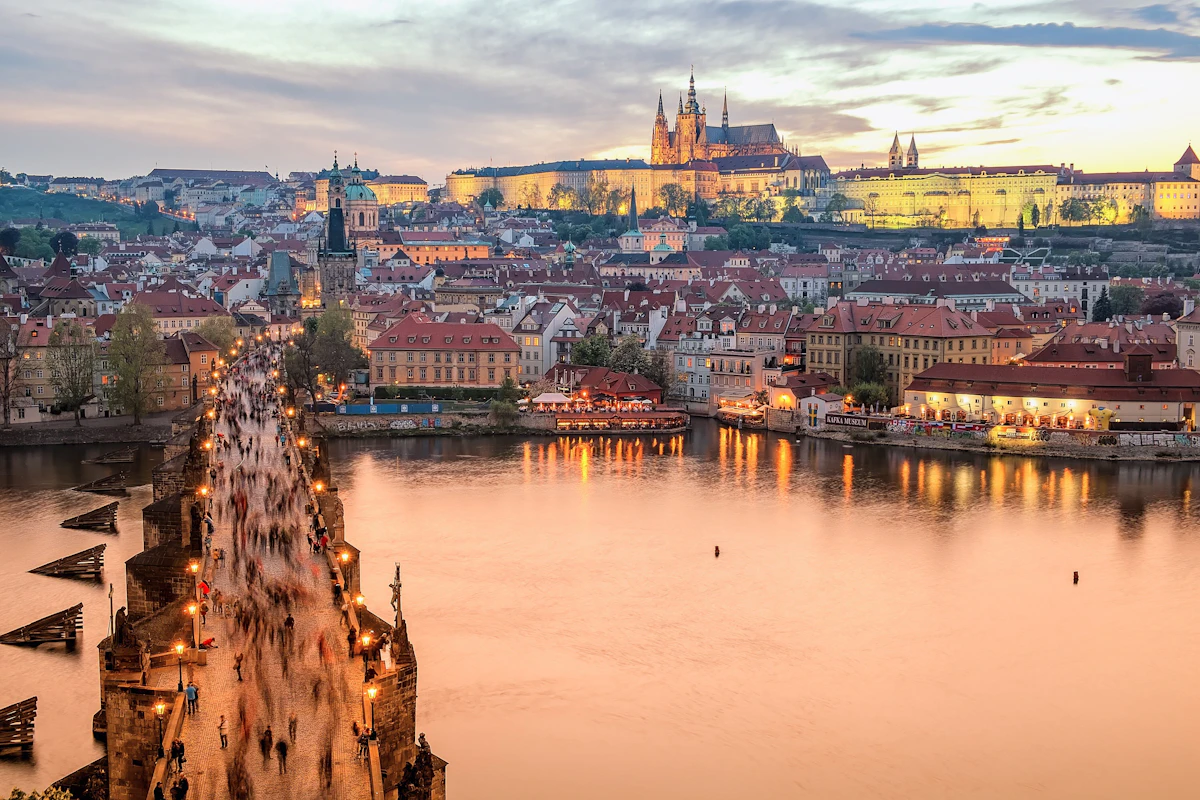
Czechia is in the EU, so the real question is who your contract leaves out — and how many of your days actually leave Prague. The two networks the plans name, and how to size one.


