



Buy a plan
Pick a destination, data allowance and validity period.





There is no deadline for first use. You can buy now and keep your plan for a future trip.
Compare Kazakhstan eSIM plans for Almaty under the Tian Shan foothills, Charyn Canyon and the Kolsai Lakes, Astana on the northern steppe, and the Yasawi shrine at Turkistan. Size the data around the legs: Almaty to Astana is roughly 973 kilometres and Almaty to Turkistan about 700. Read the territory and validity printed on the offer itself.
Kazakhstan is a country of long legs. Almaty and Astana lie about 973 kilometres apart; the drive east from Almaty to Charyn Canyon runs some 200 kilometres, and the Kolsai Lakes add hours beyond that. The northern steppe around Astana is vast, flat and thinly populated, with long open highway stretches between towns, and the arid Caspian side in the west puts even more ground between settlements. What interrupts a signal here is distance more than height, although the Tian Shan valleys behind Almaty do shadow terrain rising to about 2,850 metres. Plan for the empty road, not the mountain.
Refund policy
We always refund the full amount you paid when you request it, whether your eSIM is unused, partly used or fully used. There is no time limit for requesting a refund.
No first-use deadline
Validity does not start until your eSIM connects to a supported network at your destination. There is no deadline for first use. You can buy now and keep your plan for a future trip.
Secure checkout
Cards, Apple Pay & Google Pay — encrypted by Paysera.
24/7 support in all languages
Instant replies guaranteed.
Add the Kazakhstan profile before you fly, over a connection you already trust, make it the mobile-data line, and read the offer's own activation wording before you rely on it. Almaty International is about 15 kilometres from the city centre, a taxi or transfer of 25 to 30 minutes; Astana International is 16 to 20 kilometres out, at 25 to 35 minutes. That ride is the first thing you will want a map for, so save the route offline and switch the home contract's data off before departure. If nothing works after you clear the terminal, restart the handset outdoors and use airport Wi-Fi to reopen the plan's own setup guide.
Pick a destination, data allowance and validity period.
Scan the QR or auto-install in the app — no physical SIM.
Data activates on first connection at your destination.
Pick the profile closest to your trip. The estimate assumes normal use — maps, messaging, photos, a short call home.
As a rule of thumb, a 3–4 day city break runs on about 1–3 GB, a one-week trip on 3–5 GB, a two-week multi-country tour on 8–12 GB, and working on the road takes about 1 GB a day, so 15 GB or more for two weeks.
In total, a 5 GB data allowance covers roughly 1,700 shared photos, 83 hours of social media and browsing, 15 hours of video calls, 63 hours of music streaming, or about 1000 hours of maps and navigation. Messaging apps barely use data.
Astana · City guide
Astana is the capital and the newest-looking city in the country: Bayterek Tower, the tent-shaped Khan Shatyr entertainment complex, the Hazrat Sultan and Nur-Astana mosques, Independence Square, and the Nur Alem sphere left standing from EXPO 2017. It sits on the northern steppe roughly 973 kilometres from Almaty, a leg most travellers cover on a direct flight of about an hour and a half. Astana International is 16 to 20 kilometres from the centre, a transfer of 25 to 35 minutes across open ground.
Astana eSIM — set up before you flyAlmaty · City guide
Almaty is the largest city and the usual way in, laid out beneath the Tian Shan foothills. The wooden Ascension Cathedral, also called the Zenkov Cathedral, stands in Panfilov Park; the Green Bazaar handles the shopping and the Kok-Tobe cable car lifts you above the rooftops for the view. Shymbulak, the largest ski resort in Central Asia, and Big Almaty Lake both sit just outside town. Almaty International is about 15 kilometres from the centre, 25 to 30 minutes by taxi, and every mountain road climbs from there.
Almaty eSIM — set up before you flyCharyn Canyon and the Kolsai Lakes · City guide
East of Almaty the road runs about 200 kilometres, roughly three hours, to Charyn Canyon and its Valley of Castles — red rock formations strung along a canyon some 90 kilometres long. The Kolsai Lakes, a chain of three alpine lakes between 1,800 and 2,850 metres in the Tian Shan, are four to five hours out and usually chained onto the same loop; the first lake is the easily reached one. This is remote steppe with long approaches and limited facilities, so treat offline maps as equipment rather than a nicety.
Charyn Canyon and the Kolsai Lakes eSIM — set up before you flyTurkistan · City guide
Turkistan in the south is the country's pilgrimage city, built around the Mausoleum of Khoja Ahmed Yasawi, a Timurid-era shrine on the UNESCO World Heritage list, with old-town excavation sites alongside it. It lies about 700 kilometres from Almaty: 14 to 16 hours by train, or a shorter hop by air, often routed via Shymkent, which sits 160 to 170 kilometres to the southeast. Hazret Sultan International is 16 to 24 kilometres from town, a road transfer of 25 to 35 minutes.
Turkistan eSIM — set up before you flyWhy Horizon
Match the allowance to the shape of the trip, because Kazakhstan is usually two trips stitched together. The two anchor cities have genuinely different winters: from December to February Astana can drop below -30°C, with extreme lows near -40°C, while Almaty sits nearer -5°C under the shelter of the mountains. June to August commonly exceeds 35 to 40°C out on the steppe. May to June and September to October are the mild windows, roughly 15 to 25°C, when the steppe is either blooming or golden. Then read the offer's territory list before you count on it past a border, and weigh the validity against the days you are actually here.
Plan for
Kazakhstan
Compare the listed data allowances and validity periods for your destination.
Install over reliable Wi-Fi before departure and follow the plan's activation instructions.
Review the current price, data, validity and coverage before checkout. Horizon fixed-data plans have no throttling.
When the selected plan supports reuse or top-ups, My eSIMs shows the eligible options for the installed profile.
We'll alert you as you approach your limit. If the plan supports a top-up, My eSIMs shows the eligible options.
Choose country, regional or global coverage and check every destination in the plan details.
Fly, unless the train is part of the point. The two cities lie about 973 kilometres apart, which a direct flight covers in roughly an hour and a half, against 13 to 16 hours on the overnight train; a faster Talgo service runs the same corridor and cuts that notably. Domestic flights are the norm on this leg. The night train trades a hotel bed for the ride, but budget the whole night and expect long stretches of empty steppe.
A week is the honest minimum. Almaty itself wants two days for Panfilov Park, the Ascension Cathedral, the Green Bazaar and the Kok-Tobe cable car. Charyn Canyon is a full day at about 200 kilometres each way, and adding the Kolsai Lakes at four to five hours out turns that into two. Astana is a flight of about an hour and a half away and deserves another day or two. Turkistan, 700 kilometres south, is a separate decision.
Charyn on its own works as a day trip: roughly 200 kilometres east of Almaty, around three hours each way, so the driving eats most of the daylight but the arithmetic holds. The Kolsai Lakes are why people stay out overnight, four to five hours from the city, and the two are usually combined into one loop. Facilities on that route are limited, so a hired driver is common — agree the return timing before you set off.
Summer, for a specific reason. The Kolsai chain sits between 1,800 and 2,850 metres in the Tian Shan, and the highest terrain can hold snow into early summer, so the upper lakes open later than the first, which is the easily reached one. Big Almaty Lake sits in the same mountain belt just outside the city. May to June and September to October are the mild months overall, around 15 to 25°C.
It is genuinely severe and worth planning around. From December to February Astana can drop below -30°C, with extreme lows near -40°C, while Almaty in the same months sits nearer -5°C because the mountains shelter it. Sightseeing does not stop — Khan Shatyr, the mosques and the museums are indoor by design — but outdoor time is measured in minutes rather than afternoons. June to August commonly exceeds 35 to 40°C on the steppe.
Combine it. Turkistan's draw is the Mausoleum of Khoja Ahmed Yasawi, a Timurid-era shrine on the UNESCO World Heritage list, with old-town excavation sites beside it — half a day to a day of sightseeing rather than a week. It sits 160 to 170 kilometres northwest of Shymkent and about 700 kilometres from Almaty, which is 14 to 16 hours by train. Most travellers arrive by air or on the Talgo.
Do not assume so. A plan sold for Kazakhstan names its own territory, and an itinerary that continues into Kyrgyzstan or Uzbekistan is a separate question to settle before you cross, not after. Geographically the chain is easy — Almaty sits in the southeast, close to the neighbours — but geography and the territory list on an offer are different things. If the second country is not named there, arrange something for it separately.
No. Horizon fixed-data plans have no throttling. There is no daily limit that slows you down, so you can use your whole plan in one day if you need to. Your speed depends on the local network, your signal and how busy the network is. When your data allowance is used up, the plan stops rather than slowing down.
Yes. We always refund the full amount you paid when you request it, whether your eSIM is unused, partly used or fully used. There is no time limit for requesting a refund.
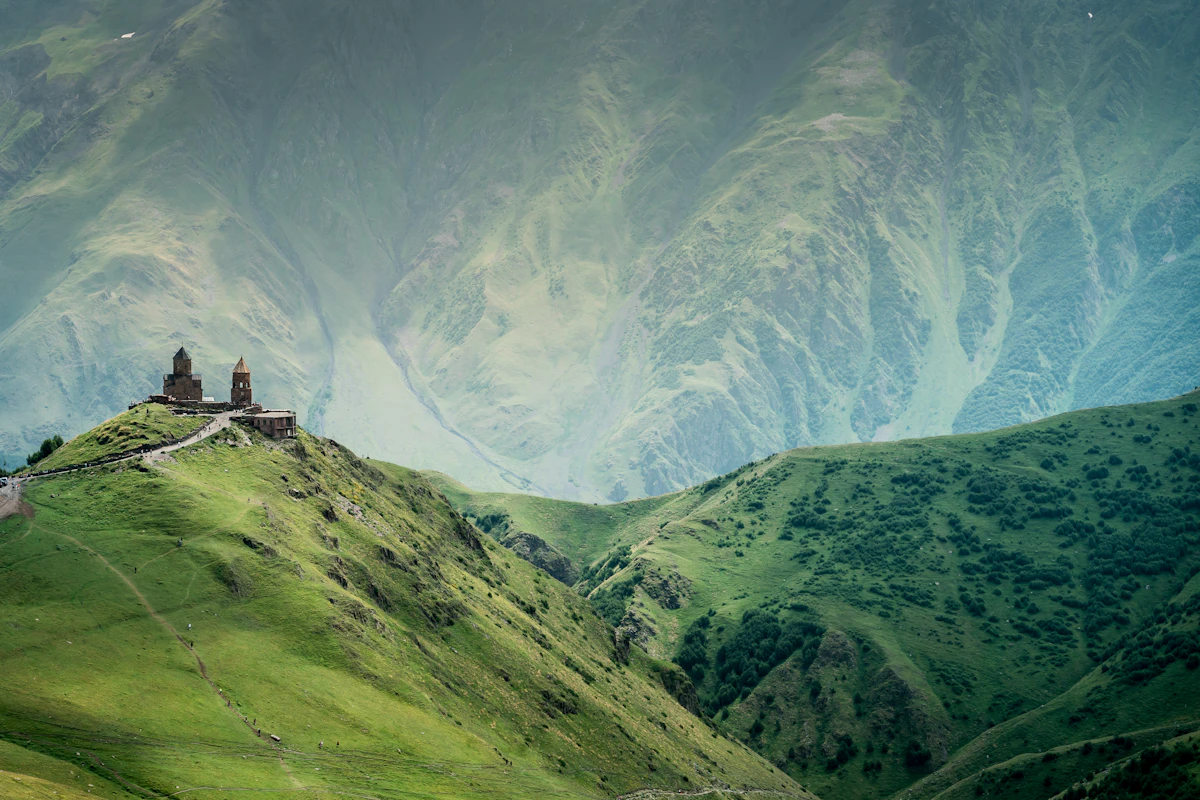
The overland arc from the South Caucasus into Central Asia crosses six separate mobile markets. One regional profile currently reaches Armenia, Azerbaijan, Georgia, Kazakhstan, Kyrgyzstan and Uzbekistan — here is how to plan the data side of the whole journey at home.

Almaty, Bishkek, Tashkent, Samarkand and Bukhara across three separate mobile markets, joined by long road and rail legs. How to size data for a Silk Road route and what to prepare before each leg.


