



Buy a plan
Pick a destination, data allowance and validity period.






Compare Oman eSIM plans for Muscat's corniche, the fort and souq at Nizwa, the dhow yards at Sur, and Salalah down in Dhofar. Set the allowance against the number of days you will actually travel, then read which territories the offer names and what it says about hotspot use.
Oman asks more of a route plan than most Gulf destinations, because the map is genuinely long. Muscat to Nizwa is about 165 kilometres and roughly two hours on good highway; Muscat to Sur is 210 to 215 kilometres along the coast, two and a half to three hours. Salalah, down in Dhofar, sits about 1,000 kilometres away — close to ten hours of driving through largely empty desert, or an hour and a half by air, which is why most visitors fly it. Between those points the Hajar Mountains throw steep switchbacks past 2,000 metres, the wadis at Shab and Bani Khalid are narrow canyons walled by rock on both sides, and the dune runs in the Wahiba area follow no marked route at all. What a handset can hold varies with every one of those.
Refund policy
Get a full refund within 7 days if no data is used, even after installation. If it doesn't work and we can't fix it, we refund you.
Activation window
Check the package details for the first-use deadline and validity rules.
Secure checkout
Cards, Apple Pay & Google Pay — encrypted by Paysera.
Customer support
Contact support before or during your trip if you need help.
Add the Oman profile before departure, over a connection you already trust, and keep the order paperwork somewhere other than the handset. Whatever you buy names the step at which it becomes the data line — follow that wording rather than a general guide. Muscat International sits about 32 kilometres west of the centre in the Seeb area, roughly 25 to 30 minutes by taxi, and there is no metro or rail link to fall back on, so have the first address and the onward route saved before you leave the terminal. Switch the home line's data off before you fly, unless paying for what it picks up is a choice you want to make.
Pick a destination, data allowance and validity period.
Scan the QR or auto-install in the app — no physical SIM.
Data activates on first connection at your destination.
Pick the profile closest to your trip. The estimate assumes normal use — maps, messaging, photos, a short call home.
As a rule of thumb, a 3–4 day city break runs on about 1–3 GB, a one-week trip on 3–5 GB, a two-week multi-country tour on 8–12 GB, and working on the road takes about 1 GB a day, so 15 GB or more for two weeks.
In total, a 5 GB data allowance covers roughly 1,700 shared photos, 83 hours of social media and browsing, 15 hours of video calls, 63 hours of music streaming, or about 1000 hours of maps and navigation. Messaging apps barely use data.
Muscat · City guide
Muscat runs along the coast rather than around a centre, so the Sultan Qaboos Grand Mosque, Mutrah Souq and its corniche, the Royal Opera House and Old Muscat with Al Alam Palace and its flanking forts are all separate stops. Qurum Beach gives a calm, gradual entry; Al Bustan, Yiti and Bandar Jissah sit further out among cliffs and coves. The airport is 32 kilometres west in the Seeb area, 25 to 30 minutes by taxi with no rail alternative, so save the arrival route first.
Muscat eSIM — set up before you fly →Nizwa · City guide
Nizwa is the interior stop: a seventeenth-century circular fort above its souq, with Jabreen Castle nearby, and the usual gateway into the Hajar Mountains and Jebel Akhdar. From Muscat it is about 165 kilometres and two hours on good highway. The climb behind the town is the part to prepare for — steep winding roads past 2,000 metres, with some sections asking for a 4x4 — so download the mountain route and the fort's hours while you are still in town.
Nizwa eSIM — set up before you fly →Sur · City guide
Sur keeps its dhow-building yards working, along with the old lighthouse and the maritime heritage sites around the harbour, and Ras Al Jinz turtle reserve lies close by — roughly 250 kilometres and three hours from Muscat, with access only through the reserve and viewing at night. Muscat to Sur itself is 210 to 215 kilometres of coastal road. Nizwa has no short link here: expect around 330 kilometres and four to five hours via Muscat or the interior roads.
Sur eSIM — set up before you fly →Salalah · City guide
Salalah anchors Dhofar, about 1,000 kilometres from Muscat — close to ten hours of driving through largely empty desert, or an hour and a half by air into the small Salalah Airport near the city. Al Mughsail Beach has cliffs and blowholes, Wadi Darbat runs green in season, and Al Baleed with the Frankincense Land Museum holds the incense history. Currents here run rougher than the sheltered Gulf of Oman beaches up north. That desert highway is the stretch to prepare offline.
Salalah eSIM — set up before you fly →Why Horizon
Most itineraries settle at seven to ten days: Muscat, the interior around Nizwa, and the east coast toward Sur and Ras Al Jinz. Salalah is the part people underestimate — a separate leg, normally flown, running on its own calendar. October to April is the comfortable window for the rest of the country, with Muscat at its coolest around 25°C from December to February, while May to September regularly pushes Muscat to 38 or 40°C and beyond in dry heat. Match the number of valid days to the whole shape of the trip, the flight south included, and check that Oman is named on the offer rather than inferred from a broader Middle East label.
Plan for
Oman
Compare the listed data allowances and validity periods for your destination.
Install over reliable Wi-Fi before departure and follow the plan's activation instructions.
Review the current price, data, validity, coverage and fair-use terms before checkout.
When the selected plan supports reuse or top-ups, My eSIMs shows the eligible options for the installed profile.
We'll alert you as you approach your limit. If the plan supports a top-up, My eSIMs shows the eligible options.
Choose country, regional or global coverage and check every destination in the plan details.
Dhofar has its own monsoon. The khareef runs roughly June to September and brings cool mist and drizzle around 25°C to Salalah and the hills behind it, turning the landscape green, while Muscat and the interior sit at 38 to 40°C or more in dry heat. That inverts the usual advice: October to April suits most of Oman, with Muscat coolest around 25°C from December to February, but June to September is the window if the green Dhofar landscape is the reason you are going.
Seven to ten days is the normal answer for Muscat, the interior around Nizwa and the east coast toward Sur, and Salalah needs more on top of that. The reason is distance rather than sightseeing volume: Muscat to Nizwa is about 165 kilometres and two hours, Muscat to Sur 210 to 215 kilometres and two and a half to three, and Nizwa to Sur has no short link at all — around 330 kilometres and four to five hours via Muscat or the interior roads.
Yes, and most people do. Salalah sits about 1,000 kilometres from Muscat, which is close to ten hours of driving through largely empty desert against roughly an hour and a half by air, so the flight is the norm. It also reads as a different country — the Arabian Sea rather than the Gulf of Oman, the frankincense sites at Al Baleed, Wadi Darbat, and the blowholes at Al Mughsail — and it runs on the khareef calendar rather than the northern one.
Self-drive is the common way to do it, because the distances are long and public transport is limited outside the main corridors. A car also decides what is reachable: the Hajar roads above Nizwa wind steeply past 2,000 metres and some sections need a 4x4, and the dune runs in the Wahiba area follow no marked route. If the trip is Muscat only, taxis are enough for a coastal city, and the airport run is 25 to 30 minutes.
Nizwa, Wadi Shab and Wadi Bani Khalid are the ones that come up most. Nizwa is about 165 kilometres and two hours each way on good highway, taking in the fort, the souq and Jabreen Castle nearby. The two wadis are narrow canyon valleys walled by rock on both sides and explored on foot or by wading, which is exactly the kind of ground where a phone stops being useful, so carry the route and the return timing offline.
Not by direct road. The Musandam exclave in the far north is physically separated from the rest of Oman by UAE territory, and it is reached through a land border crossing at Tibat or by sea or air rather than a domestic route from Muscat. In practice it is treated as its own trip, usually approached from Dubai or Ras Al Khaimah. Plan it separately, and read whether the offer names Oman alone or the neighbouring territory as well.
Both are places where the terrain, not the plan, is doing the work: Wadi Shab and Wadi Bani Khalid are canyons walled by rock on both sides, and the run south crosses close to a thousand kilometres of largely empty desert. Get back to open ground or the next town before troubleshooting anything. If it still fails there, reopen the setup guide that came with the plan, confirm the Oman profile is turned on and set as the mobile data line, and send support your order reference and handset model.

For Horizon's Middle East eSIM the answer today is yes, and the current list runs to seven countries. Why the regional label settles nothing, where this list stops, and how to check any regional plan before you pay.
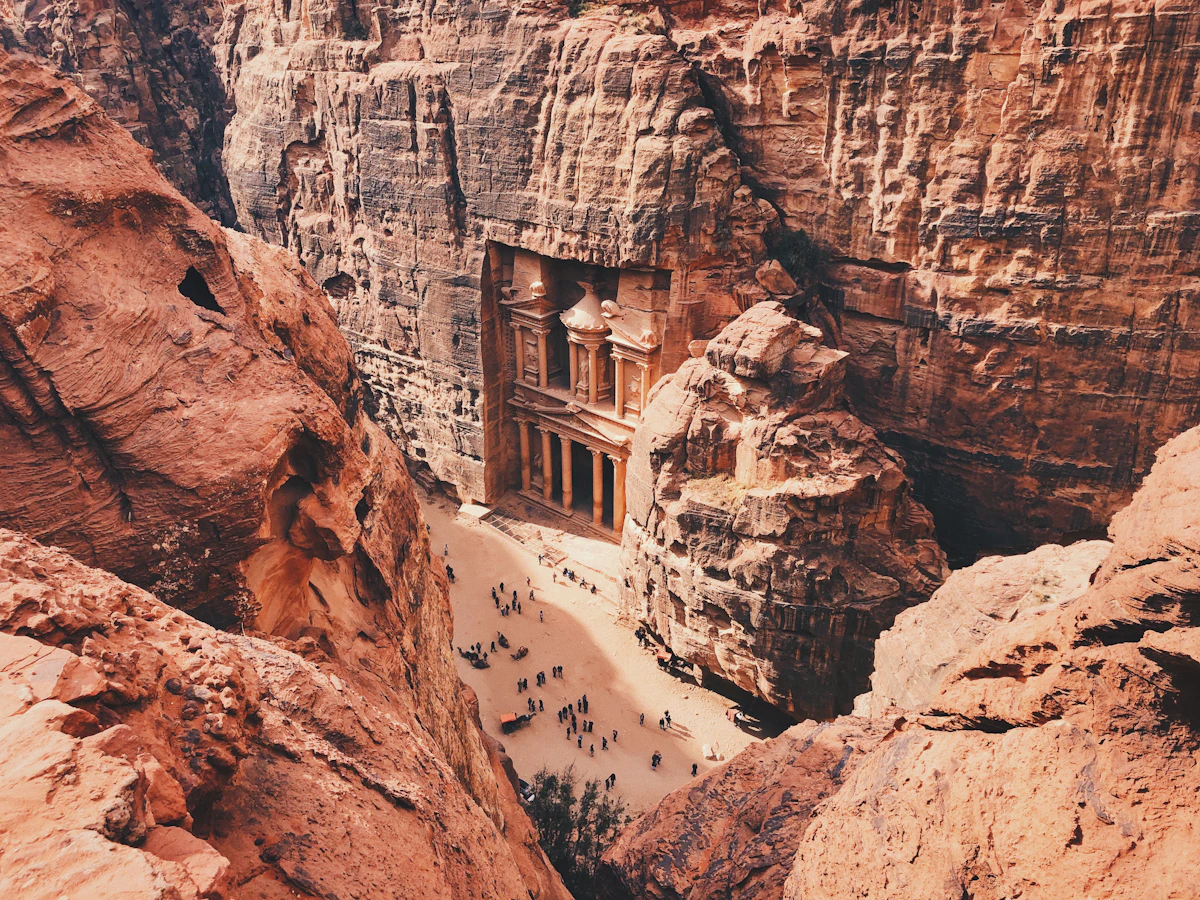
Saudi Arabia, Qatar, Oman and Egypt share Horizon’s Middle East package; Jordan needs separate coverage on new purchases. Plan the regional and country options around your actual route.


