





Croatia eSIM

Telemach Croatia 5GA1 Croatia 5G
How much data, for how long?

30 days

7 days

15 days

180 days

Validity follows the selected plan terms. 100% refund within 7 days if no data is used. If your eSIM doesn't work and we can't fix it, you get your money back.
Need broader coverage?
Explore our regional and global eSIMs — packages start from the shown price and include coverage for Croatia.
Going elsewhere too?
Add another country — each one is its own eSIM, all managed in one app.
Croatia
5 GB · 30 days
Total
€2.99
PayseraVisaMastercardApple PayGoogle Pay
From the road

What travelers say about Croatia

53 customer reviews
EN
“I used the Horizon Balkans eSIM on a recent trip. The best part was not having to think about buying a new SIM every time I crossed a border. I used it for maps, WhatsApp, checking hotels, finding restaurants, and looking up beaches and places to visit. The package covers Albania, Bosnia and Herzegovina, Bulgaria, Croatia, Greece, Montenegro, North Macedonia, and Serbia and I added Kosovo eSIM to the same order. I would use it again for another trip through the Balkans”
Fatos
Verified purchase
Balkans eSIM
EN
“I used the Europe Esim, went through different countries with it and it was working super fast 5G everywhere. Suprised for good!”
Lukas
Verified purchase
Europe + UK eSIM
EN
“The eSIM worked perfectly during my trip around Europe. It was very easy to install, connected as soon as I arrived, and the internet was fast and reliable everywhere I went. It made travelling much easier because I did not need to buy local SIM cards. Very convenient and worth the price. I would definitely use it again.”
Zell
Verified purchase
Europe + UK eSIM
Read all reviews

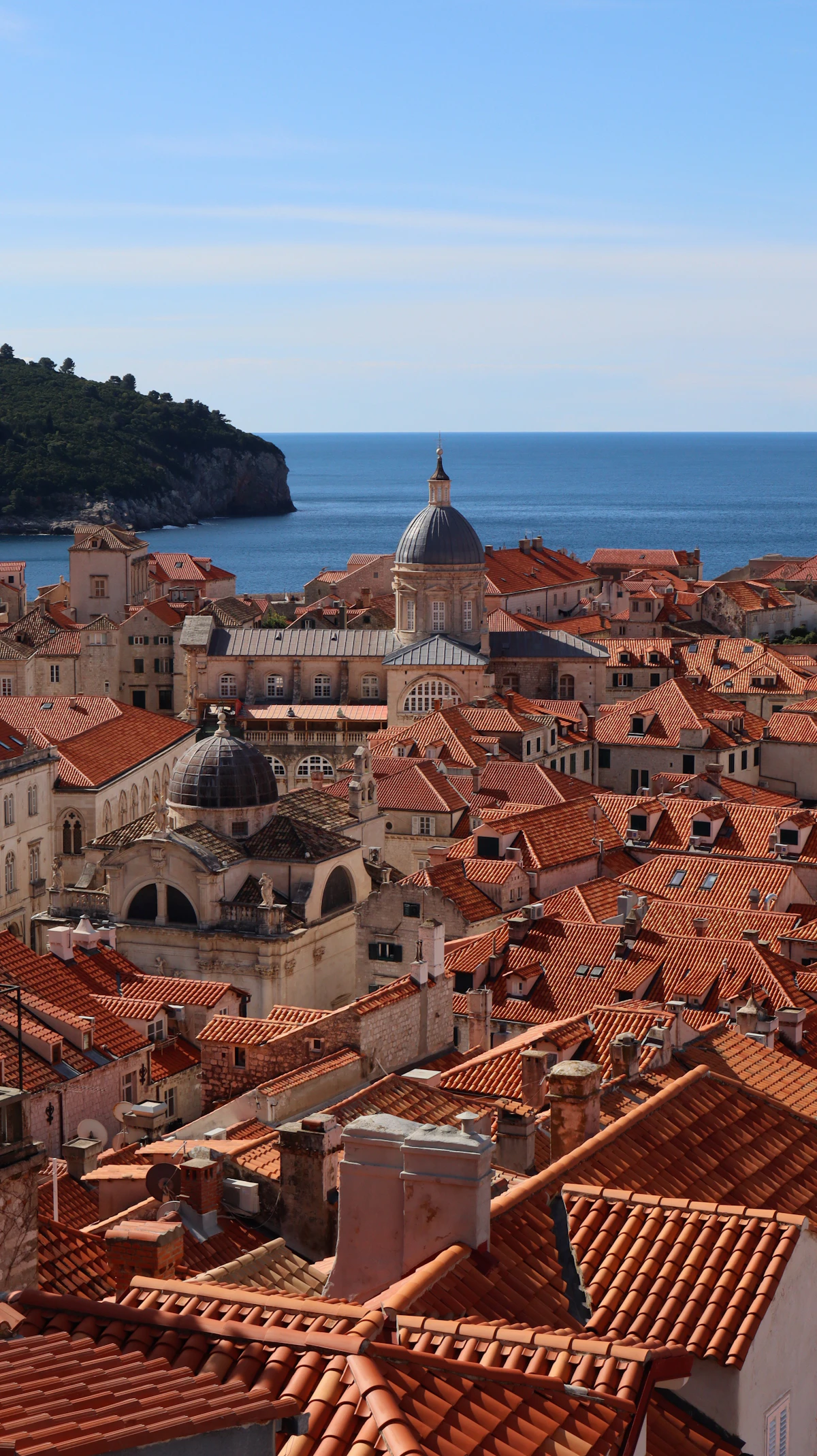
Croatia eSIM for the walled towns, the islands and the coast road

Compare Croatia eSIM plans for Zagreb, Zadar, Split and Dubrovnik, the island ferries and the Adriatic coast road. Set the allowance against the catamaran hours and the coast road rather than the days spent inside the walls, then check what the offer says about territory and hotspot use.

Croatia is a long thin country where almost everything worth seeing is made of stone or surrounded by water, and both interfere. Split is built inside Diocletian's Palace, a working Roman palace of narrow stone corridors and vaulted cellars rather than a ruin. Dubrovnik sits inside a wall circuit of roughly 1,940 metres, in places about 25 metres high, with the old town enclosed on every side. The islands are reached by catamaran and car ferry from quays in the middle of town, and the bora wind can cancel a crossing outright. Thick masonry, open water and a coast road that runs for hours decide what the handset can reach, so save the sailing time and the return before you leave the quay.

How eSIM works in Croatia

Set the Croatia profile up before you fly, on a connection you already trust, and keep the order details off the handset. The plan you buy names the step at which it becomes the data line; use that and not a general guide. The arrival airports all sit outside their old towns — Split about 24 kilometres out, Dubrovnik about 21, Zadar between eight and twelve — and each is served by a shuttle taking twenty to forty minutes. Load the shuttle and the accommodation address before leaving the terminal, and leave the home contract's data off unless you mean to pay for it.

  1. Buy a plan

    Pick a destination, data allowance and validity period.

  2. Install your eSIM

    Scan the QR or auto-install in the app — no physical SIM.

  3. Land & connect

    Data activates on first connection at your destination.

Size it to your trip

Pick the profile closest to your trip. The estimate assumes normal use — maps, messaging, photos, a short call home.

As a rule of thumb, a 3–4 day city break runs on about 1–3 GB, a one-week trip on 3–5 GB, a two-week multi-country tour on 8–12 GB, and working on the road takes about 1 GB a day, so 15 GB or more for two weeks.

Recommended size
3GB3–4 days
≈0.4 GB a day
  • Maps every day
  • Messaging and photos
  • A short call home most days
See plans this size

In total, a 5 GB data allowance covers roughly 1,700 shared photos, 83 hours of social media and browsing, 15 hours of video calls, 63 hours of music streaming, or about 1000 hours of maps and navigation. Messaging apps barely use data.

Important cities in Croatia

Split · City guide

Split

Split is built inside Diocletian's Palace, which is a working quarter of the city rather than a ruin: narrow stone corridors, vaulted cellars and the Cathedral of St Domnius bell tower rising out of the middle, with Marjan hill above the west end. The ferry port sits directly beside the Riva, so island departures begin in the city itself — Hvar Town is fifty to sixty-five minutes by catamaran, Supetar on Brač about fifty by car ferry. Load the sailing and the return inside the palace walls, where thick masonry makes checking harder.

Split eSIM — set up before you fly

Why Horizon

Choose for the coast season and the island days

Seven to ten days usually means two bases plus an island, and the season decides how workable that is. July and August are the busiest with the fullest ferry timetables; June and September are the better window, with a swimmable sea and thinner crowds. From roughly November to March many island and coastal towns effectively close, catamaran sailings drop to a couple a day and the bora can cancel crossings outright, so a winter trip belongs in Zagreb rather than on the water. One route detail is worth knowing in advance: Split to Dubrovnik now runs entirely inside Croatia across the Pelješac Bridge, where the older road crossed a short stretch of Bosnia and Herzegovina with two border stops.

Horizon eSIM Before you travel

Plan for

Croatia

Compare plan details
Check device compatibility
Install over Wi-Fi before departure
  • Flexible choice

    Better plans, built for real trips

    Compare the listed data allowances and validity periods for your destination.

  • Before departure

    Easy to use

    Install over reliable Wi-Fi before departure and follow the plan's activation instructions.

  • Clear comparison

    Compare the full plan

    Review the current price, data, validity, coverage and fair-use terms before checkout.

  • Reuse when eligible

    Reuse an eligible eSIM

    When the selected plan supports reuse or top-ups, My eSIMs shows the eligible options for the installed profile.

  • Usage control

    Stay connected

    We'll alert you as you approach your limit. If the plan supports a top-up, My eSIMs shows the eligible options.

  • Multi-country

    Global & regional plans

    Choose country, regional or global coverage and check every destination in the plan details.

Frequently asked questions

Does the drive from Split to Dubrovnik still cross Bosnia?

Not on the current route. The 2.4-kilometre Pelješac Bridge means the roughly 230 kilometres from Split to Dubrovnik, three to four hours, now run entirely inside Croatia, where the older coastal road crossed a short strip of Bosnia and Herzegovina at Neum with two border stops. If a chosen route or bus still uses that older road, or if the trip deliberately includes Mostar, then Bosnia and Herzegovina needs to appear by name on the plan's own destination list.

Which Croatian islands are worth the ferry?

It depends on the base. From Split the usual pair is Hvar, fifty to sixty-five minutes by catamaran, and Brač, about fifty minutes by car ferry to Supetar and home to the Zlatni Rat spit at Bol. Vis is the quieter choice and holds Stiniva, a cliff-walled cove reached on foot or by boat. From Dubrovnik the Elaphiti islands and Korčula are the standard runs, with Lokrum close enough for an afternoon. Check the sailing both ways before committing to a day.

When is the best time to visit the Croatian coast?

June and September are the sweet spot: the sea is warm enough to swim, the ferry timetables are still full and the walled towns are walkable without queueing. July and August bring the heat and the crowds together, which matters most in Dubrovnik, where the old town is enclosed and fills quickly. May and October are pleasant on land but the sea is cooler. From November to March much of the coast effectively shuts down, so that is the season for Zagreb and the Advent markets instead.

Are Croatian beaches sand or pebble?

Mostly pebble, and that is worth knowing before packing. The signature beach is Zlatni Rat at Bol on Brač, a fine-pebble spit reaching some 450 metres into the sea and visibly changing shape with the wind and current. Sakarun on Dugi Otok is one of the rare pale-sand shallow bays. Punta Rata at Brela anchors the Makarska Riviera below the Biokovo range, Stiniva on Vis is a cliff-walled cove, and Zrće on Pag is the open-air club beach rather than a quiet one.

Do I need a car in Croatia?

It depends which trip. A car earns its keep in Istria, at Plitvice and through the interior, where public transport is thin and the parks sit away from towns. On an island-hopping route it becomes a liability, since car ferries are slower and less frequent than catamarans, and in Dubrovnik the old town is closed to traffic anyway. Many itineraries hire for the inland leg and give the car back before the coast. Zagreb to Zadar is about 290 kilometres and three hours on the motorway.

Does a Croatia plan cover Montenegro or Slovenia too?

Only when each is named on the plan's own destination list. The question comes up constantly here because the day trips cross borders: Kotor and Budva sit about two hours south of Dubrovnik in Montenegro, Mostar is a standard day out from Split or Dubrovnik in Bosnia and Herzegovina, and Ljubljana and Lake Bled pair naturally with Zagreb and Istria in Slovenia. Croatia and Slovenia are EU members while Montenegro and Bosnia and Herzegovina are not, so a single European heading covers them unevenly. Read the list.

The eSIM stopped working inside the old town — is it broken?

Probably not, and Croatia is where this confusion is most common. Split's palace cellars and Dubrovnik's walled lanes are thick stone, and a catamaran deck is open water, so a signal that drops in those places and returns outside is behaving normally rather than failing. Judge the profile in the open first. If it still fails out in the open, use accommodation Wi-Fi to reopen the plan's own setup guide, confirm the Croatia profile is enabled and set as the mobile-data line, follow its roaming and APN steps in order, and send support the order reference and handset model if it still fails.

Where next
Travel guides for Croatia